The People of Pompeii: Life in the Ancient City
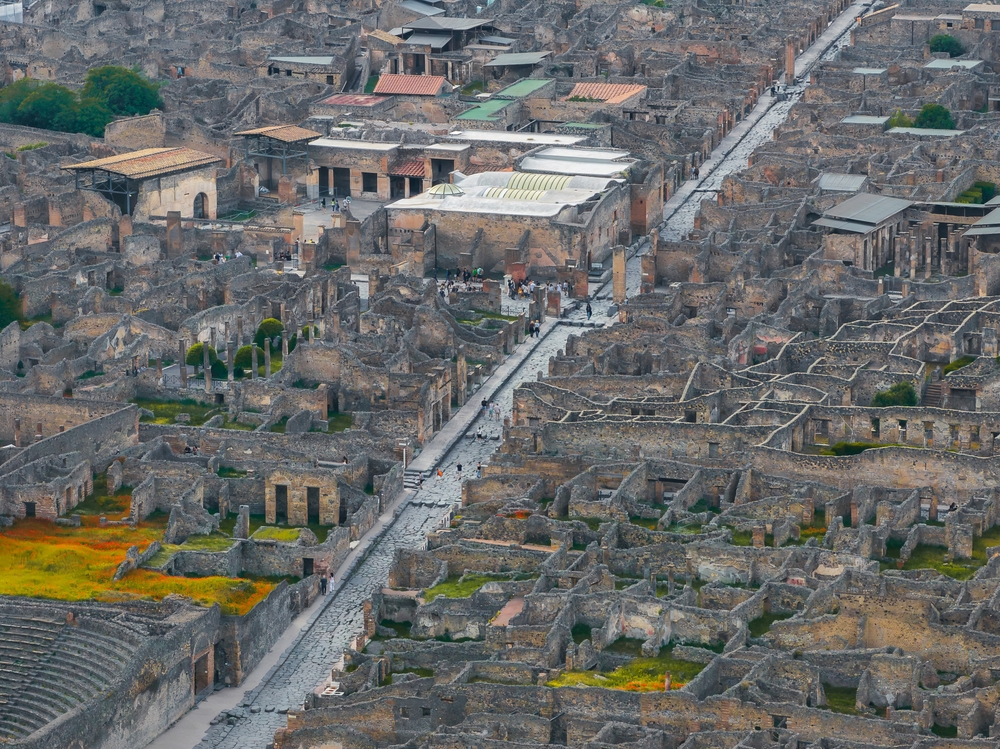
The People of Pompeii
Before Vesuvius destroyed it in 79 AD, Pompeii was a living, breathing Roman town of roughly 11,000–12,000 people. It was not a city of emperors and senators but of merchants, bakers, fullers, innkeepers, freed slaves and the enslaved — an ordinary, prosperous port community frozen at a single moment. Because the ash preserved not just buildings but election posters, shop signs, graffiti and even the shapes of the victims, we know more about the everyday people of Pompeii than about almost any other place in the ancient world.
This page is about those people: who they were, how their society was organised, what daily life looked like, the individuals we can still name, and — finally — the archaeologists who dug them out of the ash and gave them back their names.
Who Lived in Pompeii?
Pompeii sat on a busy trade route near the mouth of the River Sarno, so its population was mixed and cosmopolitan. Roman citizens formed the core, but the town also housed Greeks, Egyptians, freed slaves and foreign merchants drawn by its wine, textile and garum trades. Inscriptions mention worshippers of Isis and other eastern gods, a sign of how far Pompeii's connections reached across the Mediterranean.
Estimates of the exact number vary — most scholars settle on about 11,000–12,000 inside the walls, with thousands more in the surrounding farms and villas. For the detailed demographics, see our dedicated page on the population of Pompeii.
Social Classes: From Elite to Enslaved
Roman society was steeply hierarchical, and Pompeii was a miniature of it. Broadly, its people fell into four groups.
| Class | Who they were | Role in Pompeii |
|---|---|---|
| Elite (decurions) | Wealthy landowning citizens | Ran the town council, funded buildings and games |
| Plebeians | Ordinary free citizens | Shopkeepers, craftsmen, farmers, traders |
| Freedmen (liberti) | Former slaves, now free | Often rich merchants; barred from top office but powerful |
| Slaves (servi) | Enslaved men and women | Labour in homes, workshops, bakeries, farms and the port |
- The elite — a small circle of families like the Holconii — dominated the town council (the ordo decurionum) and competed for the annual magistracies (duumviri and aediles). They advertised their status by paying for the amphitheatre, baths, temples and public games.
- Plebeians, the free working majority, ran Pompeii's countless shops, bars and workshops. Their voices survive in the painted electoral notices that still cover the walls.
- Freedmen (liberti) are one of Pompeii's most striking stories. Legally free but socially marked, many grew wealthy in trade — the brothers who built the House of the Vettii were freedmen who flaunted their success in gilded frescoes.
- Slaves were everywhere and largely invisible in the record, yet they baked the bread, stoked the baths and carried the goods that made the town work.
Daily Life in Pompeii
The rhythm of a Pompeian day revolved around the forum, the baths and the street. Business was done in the morning; the afternoon brought the public baths, a social ritual as much as a wash; evenings meant taverns, dinner parties and, on festival days, the amphitheatre.
- Food and drink: Most ordinary people ate out. The city had scores of thermopolia — counter-service fast-food bars — serving hot dishes and wine to workers who had no kitchen at home.
- Work: Pompeii lived on wine, wool and garum (a pungent fermented fish sauce exported across the empire). Bakeries, fulleries (laundries and cloth-finishers) and workshops lined the streets.
- Politics and leisure: Elections were fiercely contested, gladiatorial games filled the amphitheatre, and the walls carried everything from campaign slogans to lovers' boasts and insults — the ancient world's social media.
Famous Pompeians We Can Name
Thanks to inscriptions, wax tablets and graffiti, we know real individuals — not just "the Romans" but people with names, jobs and reputations:
- Lucius Caecilius Iucundus — a banker and auctioneer whose archive of wax tablets recorded his loans and deals; his house preserved a famous bronze portrait bust.
- Julia Felix — a shrewd businesswoman who, after the earthquake of 62 AD, converted part of her large estate into rentable baths, shops and apartments, advertising them on a painted sign.
- The Vettii brothers (Aulus Vettius Conviva and Restitutus) — freedmen made rich by trade, owners of the sumptuously decorated House of the Vettii.
- Eumachia — a wealthy priestess and patron of the fullers' guild, who funded a grand building on the forum.
- Aulus Umbricius Scaurus — the town's leading garum producer, whose brand was stamped on jars found across the region.
What the Victims Tell Us
Not everyone escaped. Around 1,150 bodies have been found across the site, and Giuseppe Fiorelli's plaster casts preserve their final postures — a family sheltering together, a man shielding his face, a chained dog. These casts turn abstract history into individual human lives, and they remain the most moving evidence of who the people of Pompeii were. Read more about them on our bodies of Pompeii page and how the casts were made.
The People Who Uncovered Pompeii
The second set of "people of Pompeii" are the archaeologists and directors who, over nearly three centuries, dug the city out of the ash.
- Giuseppe Fiorelli (director from 1863) is the father of scientific excavation here: he mapped the city into the regiones and insulae still used today and invented the body-cast technique.
- Amedeo Maiuri (1924–1961) ran Pompeii for almost four decades, opening its grand houses and long streets and pioneering the idea of leaving finds in situ.
- Massimo Osanna (2014–2021) led the EU-funded Great Pompeii Project, stabilising the ruins and producing spectacular new discoveries in Regio V.
- Gabriel Zuchtriegel, Director-General since 2021, has driven fresh excavation at Civita Giuliana and in Regio IX while widening public access — read his story on the Gabriel Zuchtriegel page.
- Igor Mitoraj, the Polish sculptor whose monumental bronzes have stood among the ruins since 2016, is a modern figure now woven into the site — see Igor Mitoraj at Pompeii.
For the full story of how the city was found and dug, see the discovery of Pompeii and its excavation.
Related Pages
Pompeii: Small Group Tour with an Archaeologist
Meet their stories where they lived — explore with an expert archaeologist in a small group.
Frequently Asked Questions
Who were the people of Pompeii?
Pompeii was home to a mix of around 11,000–12,000 people: wealthy Roman citizens who governed the town, a large middle layer of shopkeepers and craftsmen, ambitious freed slaves (liberti) who often grew rich in trade, and the enslaved men and women who did much of the labour. It was a busy, cosmopolitan port town, so Greeks, Egyptians and other Mediterranean traders also lived and worked among the Romans.
How many people lived in Pompeii?
Most estimates put Pompeii's population at roughly 11,000–12,000 at the time of the eruption in 79 AD, though figures range from about 10,000 to 20,000 including the surrounding farms and villas. For a fuller breakdown see our page on the population of Pompeii.
Who are the most famous residents of Pompeii?
Named Pompeians we know from inscriptions include the banker Lucius Caecilius Iucundus, the businesswoman Julia Felix who rented out her property after the 62 AD earthquake, the freedman brothers Aulus Vettius Conviva and Restitutus who owned the lavish House of the Vettii, the priestess and patron Eumachia, and the garum (fish-sauce) magnate Aulus Umbricius Scaurus.
Were there slaves in Pompeii?
Yes. Slavery was central to Roman life, and a large share of Pompeii's population was enslaved — working in homes, workshops, bakeries, farms and the port. Some were freed and became liberti (freedmen), who could own businesses and property, though they carried the social mark of former slavery. Several of Pompeii's richest households were built by successful freedmen.
Who discovered Pompeii?
The buried city was found by accident in 1748 during Bourbon-era engineering works, eighteen years after nearby Herculaneum surfaced. No single person discovered it, but the archaeologist Giuseppe Fiorelli, director from the 1860s, turned treasure-hunting into scientific excavation and devised the plaster casts of the victims.