Discovery of Pompeii — How the Lost City Was Found
The Rediscovery of a Lost World
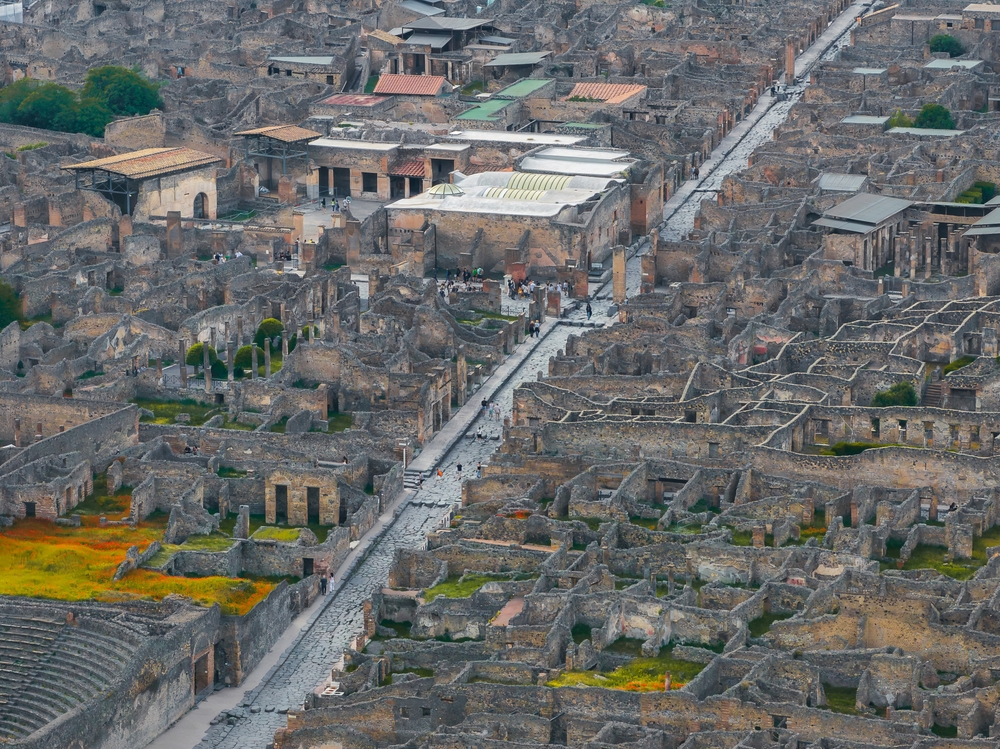
The story of how pompeii city discovered is almost as remarkable as the city itself. For nearly 1,700 years, one of the most complete records of ancient Roman life lay buried beneath the earth of southern Italy, waiting to be found. When the pompeii city uncovered its secrets at last, it transformed our understanding of the ancient world and gave birth to the modern discipline of archaeology.
The First Encounter (1599)
In 1599, Italian architect Domenico Fontana was supervising the construction of a water channel (the Canale del Conte di Sarno) designed to bring water from the Sarno River to the town of Torre Annunziata. As his workers dug through the ground, they cut through the walls of ancient buildings, uncovering inscriptions, painted walls, and architectural fragments.
Fontana noted the discoveries in his records but apparently did not pursue them further. Some historians have speculated that the frescoes uncovered included explicit sexual content and that their discovery was deliberately suppressed by the Counter-Reformation Church, though this remains disputed.
The Bourbon Excavations (1748-1860)
The true rediscovery of Pompeii came in the context of the broader archaeological fever gripping 18th-century Europe. In 1738, workers had begun excavating the site of Herculaneum, and the spectacular finds there — bronze statues, frescoes, papyrus scrolls — created enormous excitement throughout Europe.
In 1748, Rocque Joaquin de Alcubierre, the Spanish military engineer directing the Herculaneum excavations, turned his attention to the area of La Civita, where local tradition held that ancient structures lay beneath the surface. This was the beginning of continuous excavation at Pompeii.
The early excavations were essentially organized treasure hunts. Workers dug tunnels and trenches, removed portable objects of value or artistic interest, and often reburied the structures after stripping them of their decorations. Many frescoes were cut from walls and carried to the royal collection at the Palace of Portici (later transferred to the Naples Archaeological Museum).
In 1763, a monumental inscription was discovered bearing the words Rei Publicae Pompeianorum — confirming, at last, that the site was indeed the ancient city of Pompeii. This discovery generated immense scholarly and public interest throughout Europe.
The Fiorelli Revolution (1860-1875)
The most transformative figure in the history of Pompeii's excavation was Giuseppe Fiorelli, who was appointed director of excavations in 1860. Fiorelli revolutionized the approach to the site in several fundamental ways.
Systematic excavation: Rather than tunneling into buildings to extract objects, Fiorelli insisted on excavating from the top down, removing the volcanic overburden layer by layer. This preserved the context of finds and allowed buildings to be studied as complete structures.
The region system: Fiorelli divided the excavated city into nine numbered regions (Regiones I-IX), each subdivided into blocks (insulae) and individual entrances. This cataloging system, still in use today, made it possible to precisely locate and reference every building and find.
The plaster casts: In 1863, Fiorelli developed the technique that would produce Pompeii's most famous and haunting feature. Noticing that the voids left by decomposed bodies in the hardened ash preserved the exact form of the victims, he had workers pour liquid plaster of Paris into these cavities. When the surrounding ash was removed, the result was a three-dimensional reproduction of the victim at the moment of death. This technique captured facial expressions, clothing folds, and even the positions of fingers.
Modern Archaeology at Pompeii
Since Fiorelli, excavation at Pompeii has continued under a succession of directors, each contributing new approaches and discoveries. Today, archaeological work at Pompeii employs cutting-edge technology including 3D laser scanning, drone surveys, ground-penetrating radar, CT scanning of plaster casts, and advanced chemical analysis of organic remains.
The focus has shifted from uncovering new areas to conserving and studying what has already been revealed. With approximately one-third of the pompeii city found still unexcavated, archaeologists have deliberately slowed the pace of new excavation, recognizing that future technologies will allow for even better investigation and preservation.
Pompeii: Small Group Tour with an Archaeologist
See it with an expert — a small-group walk through Pompeii led by a professional archaeologist.
Frequently Asked Questions
Who discovered Pompeii?
Pompeii was accidentally discovered in 1599 by architect Domenico Fontana during construction of a water channel, but was not recognized as the ancient city. Systematic excavation began in 1748 under Spanish engineer Rocque Joaquin de Alcubierre, commissioned by King Charles III of Naples.
When was Pompeii first excavated?
Systematic excavation began in 1748. The site was definitively identified as Pompeii in 1763 when an inscription reading 'Res Publica Pompeianorum' was uncovered. Excavation has continued almost without interruption since then.