Pompeii Excavation History — From 1748 to Today
When Was Pompeii Excavated?
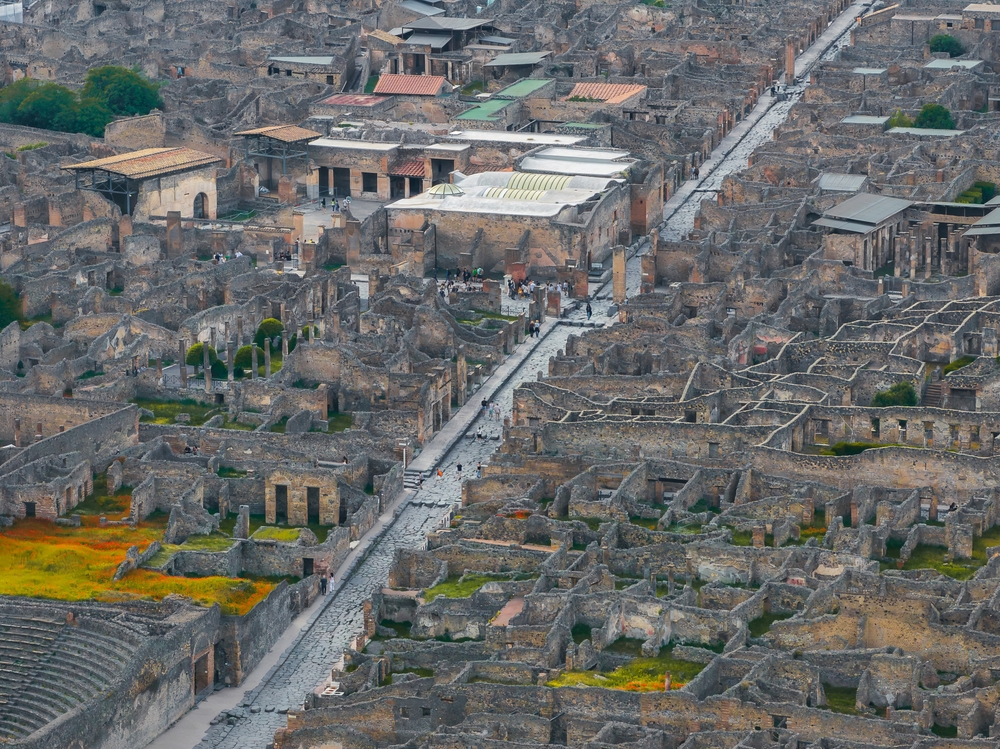
Pompeii was rediscovered and systematically excavated beginning in 1748, under Charles of Bourbon, King of Naples, a decade after digging started at nearby Herculaneum in 1738. The work later became scientific under Giuseppe Fiorelli in the 1860s, and continues today through the Great Pompeii Project and recent digs in Regio V and Regio IX. Roughly two-thirds of the city has now been uncovered.
The Italian name for the site, the scavi di Pompei (the Pompeii excavations), reflects how central digging has been to its story for nearly three centuries. What began as a royal treasure hunt grew into one of the longest-running and most influential archaeological projects in the world.
The Bourbon Beginnings (1748)
The first excavations were sponsored by the Bourbon court, eager for spectacular finds to fill royal collections. Workers tunnelled into the buried town, removed statues, frescoes and valuables, and often reburied the structures afterwards. The site was confirmed as Pompeii in 1763, when an inscription reading Rei Publicae Pompeianorum was found. These early digs recovered magnificent objects but destroyed much archaeological context in the process.
The Fiorelli Revolution (1860s)
The decisive turning point came when Giuseppe Fiorelli became director in 1860. He replaced haphazard tunnelling with disciplined method:
- Stratigraphic excavation. Digging from the top down, layer by layer, so buildings were uncovered intact and the position of every find was recorded.
- The region and insula system. Dividing the city into nine numbered regions (Regiones), each split into blocks (insulae) and individual doorways, a referencing system still used today.
- The plaster casts. Pouring plaster into the voids left by decomposed victims, capturing their bodies, clothing and final postures in haunting detail.
Fiorelli's approach made Pompeii a model for modern scientific archaeology worldwide.
Modern Work and the Great Pompeii Project
By the late 20th and early 21st centuries, the priority shifted from exposing new ground to conserving what had already been revealed, which was deteriorating after long exposure. The Great Pompeii Project, a major EU-backed conservation and research programme, stabilised crumbling structures, improved drainage and funded careful study.
Recent excavations in Regio V and Regio IX have produced striking discoveries: vivid new frescoes, a ceremonial banqueting room, a snack bar (thermopolium) with painted counters, fresh inscriptions and further victim remains. These digs use 3D scanning, drones and laboratory analysis, combining new exposure with intensive recording.
Excavation Timeline
- 1738 — Excavation begins at neighbouring Herculaneum.
- 1748 — Systematic digging starts at Pompeii under Charles of Bourbon.
- 1763 — An inscription confirms the site is ancient Pompeii.
- 1860s — Fiorelli introduces stratigraphic method, the region/insula numbering and plaster casts.
- 20th century — Large areas opened; conservation problems mount.
- 2012 onward — The Great Pompeii Project funds stabilisation and research.
- 2018–present — New finds in Regio V and Regio IX continue to make headlines.
How Much of Pompeii Has Been Excavated?
Roughly two-thirds of Pompeii is uncovered, about 44 of its 66 hectares. The remaining third has been deliberately left buried. Archaeologists now treat unexcavated ground as a reserve for the future, on the principle that later generations will have better tools and methods to study it without the rapid decay that exposure causes. In other words, leaving part of Pompeii underground is not neglect but a careful conservation strategy for the scavi di Pompei.
Pompeii: Small Group Tour with an Archaeologist
See it with an expert — a small-group walk through Pompeii led by a professional archaeologist.
Frequently Asked Questions
When was Pompeii excavated?
Systematic excavation of Pompeii began in 1748 under Charles of Bourbon, King of Naples, a decade after digging started at nearby Herculaneum in 1738. Work has continued, with interruptions, ever since, evolving from early treasure hunting into the careful stratigraphic archaeology practised at the site today.
How much of Pompeii has been excavated?
Roughly two-thirds of Pompeii has been excavated, about 44 of its 66 hectares. The remaining third has been deliberately left buried so that future archaeologists, using better techniques, can investigate it. This conservation choice protects unexcavated areas while preserving what has already been uncovered.
Who started the scientific excavation of Pompeii?
Giuseppe Fiorelli, appointed director in 1860, transformed Pompeii's excavation. He introduced top-down stratigraphic digging, the region and insula numbering system still used today, and the plaster casting of victims. His methods turned Pompeii from a treasure hunt into a foundation of modern scientific archaeology.
Is Pompeii still being excavated today?
Yes. The Great Pompeii Project, launched to stabilise and conserve the site, has funded new work, and recent digs in Regio V and Regio IX have uncovered fresh frescoes, rooms and inscriptions. Modern excavation emphasises conservation, recording and study rather than simply exposing more of the buried city.