Campania, Italy
Pompeii City
The Definitive Guide to the Ancient City Frozen in Time — History, Visiting Info, Maps & More
Explore Pompeii
Discover the Ancient City
History of Pompeii
From its founding in the 7th century BC to the catastrophic eruption of 79 AD and its modern rediscovery.
EruptionThe Eruption of 79 AD
Hour-by-hour account of the eruption that buried Pompeii under meters of volcanic ash and pumice.
VisitPlan Your Visit
Tickets, opening hours, getting there from Rome and Naples, and tips for the best experience.
PlacesMust-See Places
Villa of the Mysteries, House of the Faun, the Forum, the Amphitheatre, and more.
VolcanoMount Vesuvius
The volcano that destroyed Pompeii. Geology, eruption history, hiking guide, and current status.
DiscoveryPompeii Bodies
The haunting plaster casts of Pompeii's victims, the technique behind them, and the ethical debate.
Tours & Tickets
Book Your Pompeii Experience
Skip-the-line tickets, expert archaeologist tours, and day trips from Rome, Naples & Sorrento — live availability and verified ratings.
Welcome to Pompeii: A City Frozen in Time
Pompeii is one of the most extraordinary archaeological sites in the world. As a pompeii ancient city of remarkable significance, this Roman metropolis located at the foot of Mount Vesuvius in the Campania region was buried under meters of volcanic ash and pumice when Vesuvius erupted catastrophically on August 24, 79 AD. Today, pompeii city Italy stands as the world's most complete window into ancient Roman civilization. The eruption that destroyed the city also preserved it in astonishing detail, creating a time capsule of Roman life that continues to captivate millions of visitors every year.
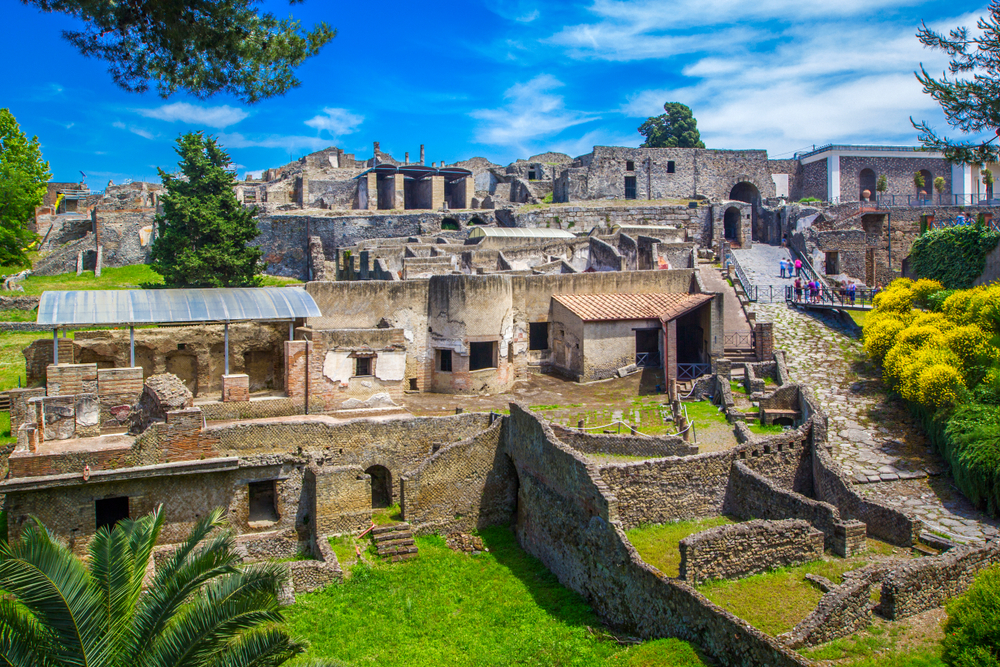
Walking through the streets of pompeii city today is a deeply moving experience. You can see the ruts worn into the stone streets by ancient chariot wheels, step into homes where frescoes still glow with vivid color after nearly two millennia, and stand in the Forum where Roman citizens once gathered to conduct business, worship their gods, and debate the affairs of the day.
A Brief Overview of Pompeii City History
The pompeii city history begins in the 7th or 6th century BC when it was founded by the Osci, an Italic people of southern Italy. The pompeii city came under Greek influence, then Samnite control, before being conquered by Rome in 80 BC when it became a Roman colony under the name Colonia Cornelia Veneria Pompeianorum. At its peak, Pompeii was a thriving city of approximately 11,000 residents, a prosperous center of commerce and culture strategically located on the Bay of Naples.
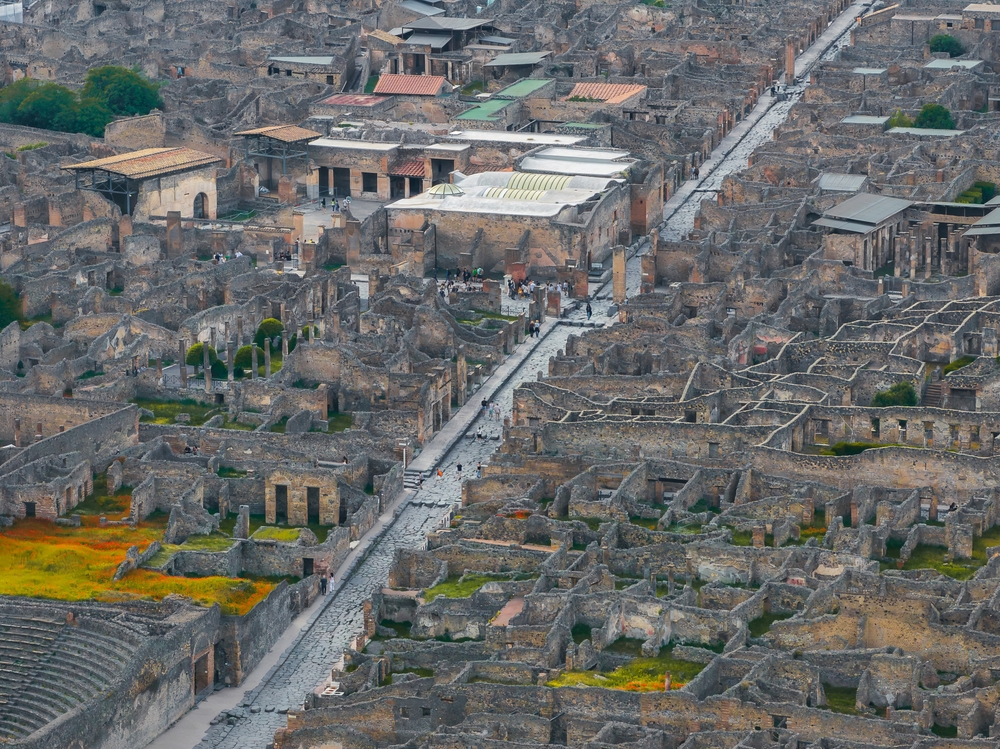
The city's streets were laid out in a grid pattern, its buildings ranged from modest workshops to palatial homes adorned with exquisite frescoes and mosaics, and its public spaces included a grand forum, two theatres, an amphitheatre that could seat 20,000 spectators, and numerous temples dedicated to various Roman and Greek deities.
The Eruption of 79 AD
On August 24, 79 AD, after centuries of dormancy, Mount Vesuvius erupted with devastating force. The eruption unfolded in two main phases. The first phase, lasting approximately 18 hours, showered the city with a rain of pumice stones and ash that accumulated to depths of nearly 3 meters. Many residents fled during this phase, but those who remained faced the second, far deadlier phase.
Beginning in the early hours of August 25, a series of pyroclastic surges — superheated avalanches of gas, ash, and rock traveling at speeds up to 700 kilometers per hour and temperatures exceeding 300 degrees Celsius — swept down the flanks of Vesuvius. These surges killed everyone still in the city instantly and buried Pompeii under an additional 3 meters of volcanic material.
We know these details thanks largely to Pliny the Younger, a Roman author who witnessed the eruption from Misenum, about 35 kilometers across the Bay of Naples. His letters to the historian Tacitus provide the only surviving eyewitness account of the disaster and are so detailed that volcanologists use the term "Plinian eruption" to describe this type of volcanic event.
Rediscovery and Excavation
Pompeii lay buried and largely forgotten for nearly 1,700 years. Although the site was accidentally rediscovered in 1599 during the digging of a water channel, systematic excavation did not begin until 1748 under the direction of Spanish engineer Rocque Joaquin de Alcubierre. The early excavations were essentially treasure hunts, focused on recovering valuable artifacts rather than understanding the site.
The modern era of scientific excavation at Pompeii began with Giuseppe Fiorelli, who became director of excavations in 1860. Fiorelli introduced systematic methods, divided the city into regions and blocks for cataloging purposes, and developed the revolutionary technique of pouring plaster into the voids left by decomposed bodies in the ash, creating the haunting casts that are among Pompeii's most famous features today.
What to See in Pompeii
The archaeological site of Pompeii covers approximately 66 hectares (163 acres), of which roughly two-thirds have been excavated. The most significant sites include:
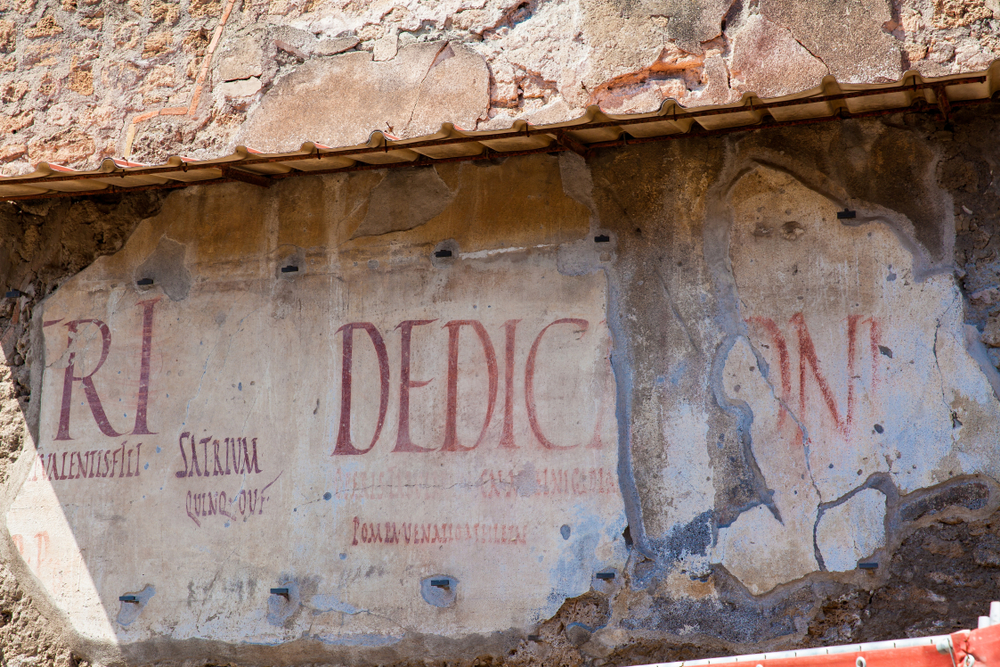
The Forum — The political, religious, and commercial heart of the city, surrounded by temples, government buildings, and markets. The Forum offers spectacular views of Mount Vesuvius rising in the background.
Villa of the Mysteries — Located just outside the city walls, this suburban villa contains one of the most remarkable and best-preserved fresco cycles of the ancient world, depicting what is believed to be a Dionysiac mystery rite.
House of the Faun — The largest and most lavish private residence in Pompeii, famous for its bronze dancing faun sculpture and the magnificent Alexander Mosaic depicting the Battle of Issus between Alexander the Great and Darius III of Persia.
The Amphitheatre — Built around 70 BC, this is the oldest known permanent stone amphitheatre in the Roman world, predating the Colosseum by over a century. It could seat approximately 20,000 spectators for gladiatorial contests.
The Lupanar — Pompeii's most famous brothel, featuring erotic frescoes above each doorway that depicted the services offered within. It provides unique insights into sexuality and social life in the ancient Roman world.
Temple of Apollo — One of the oldest religious structures in Pompeii, dating back to the 6th century BC when the city was under Greek influence. The temple stands in a large colonnaded courtyard adjacent to the Forum.
Visiting Pompeii Today
Pompeii is one of Italy's most visited tourist attractions, welcoming approximately 4 million visitors annually. The archaeological park is open every day except January 1, May 1, and December 25. Summer hours are typically 09:00 to 19:00, while winter hours run from 09:00 to 17:00.
Reduced-price tickets are available for EU citizens aged 18-25, and entry is free for those under 18. A combined ticket covers both Pompeii and Herculaneum. Ticket rates are set by the Archaeological Park and change from time to time, so check the current price on the official pompeiisites.org. On the first Sunday of each month, entry to all Italian state museums and archaeological sites, including Pompeii, is free.
The site is most easily reached from Naples via the Circumvesuviana train line, a journey of approximately 35 minutes. From Rome, you can take a high-speed train to Naples (about 70 minutes) and then transfer to the Circumvesuviana. The nearest station is Pompei Scavi - Villa dei Misteri, located right at the main entrance to the archaeological park.
Pompeii's Legacy
Pompeii's significance extends far beyond its archaeological value. The city has profoundly influenced our understanding of Roman civilization, providing unparalleled evidence of daily life, social organization, architecture, art, and even diet in the ancient Roman world. Items as mundane as bread loaves, still carbonized in their original shape, have been recovered from Pompeii's bakeries, while graffiti scratched into walls reveals the humor, rivalries, and romantic entanglements of ordinary Romans.
The site has also served as a powerful reminder of the destructive power of nature and the fragility of human civilization. Mount Vesuvius remains an active volcano, and approximately 3 million people live in its potential danger zone today, making it one of the most closely monitored volcanoes on Earth.
Whether you are a history enthusiast, an archaeology buff, or simply a curious traveler, this pompeii city Italy destination offers an experience unlike any other — a direct, visceral connection to a world that existed two thousand years ago, preserved in extraordinary detail by the very disaster that destroyed it.
Frequently Asked Questions
What happened to Pompeii?
Pompeii was an ancient Roman city near modern Naples, Italy, that was buried under 4 to 6 meters of volcanic ash and pumice in the eruption of Mount Vesuvius on August 24, 79 AD. The eruption killed approximately 2,000 of the city's 11,000 residents and preserved the city in remarkable detail for nearly 1,700 years until its rediscovery in 1748.
Can you visit Pompeii today?
Yes, Pompeii is one of Italy's most popular tourist attractions, receiving approximately 4 million visitors per year. The Pompeii Archaeological Park is open daily from 09:00 to 19:00 (summer hours). Standard adult admission applies (check current rates on pompeiisites.org). The site is accessible from Naples by the Circumvesuviana train line.
How long does it take to visit Pompeii?
A thorough visit to Pompeii takes 3 to 5 hours. The archaeological site covers 66 hectares (163 acres), of which about two-thirds have been excavated. Key highlights like the Forum, Villa of the Mysteries, and the Amphitheatre can be seen in 3 hours, but exploring the lesser-known streets and houses requires more time.
Is Pompeii a UNESCO World Heritage Site?
Yes, Pompeii was inscribed as a UNESCO World Heritage Site in 1997 as part of the 'Archaeological Areas of Pompei, Herculaneum and Torre Annunziata.' UNESCO recognized it as providing a complete and vivid picture of society and daily life at a specific moment in the past.
Where is Pompeii located?
Pompeii is located in the Campania region of southern Italy, about 23 kilometers (14 miles) southeast of Naples and approximately 240 kilometers (150 miles) south of Rome. The modern town of Pompei (spelled with one 'i' in Italian) sits adjacent to the archaeological site.