Graffiti of Pompeii: Voices from the Ancient Walls
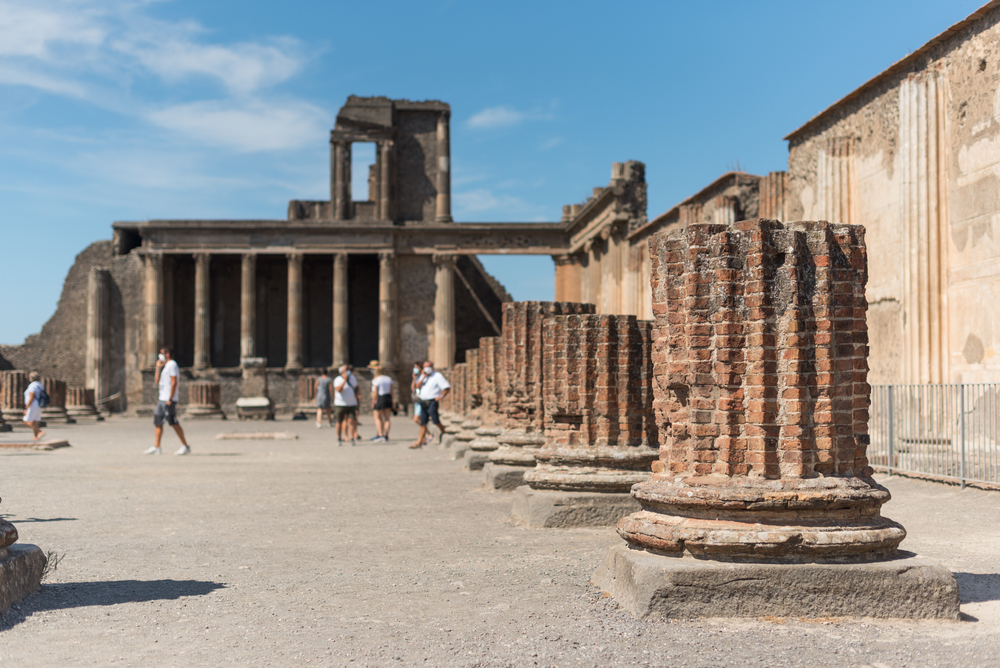
Writing on the Walls of Pompeii
Few discoveries from the ancient world feel as immediate as the Pompeii graffiti. While temples, mosaics, and grand houses tell us how the elite wished to be remembered, the writing scratched and painted across the city's walls preserves the unguarded voice of ordinary people. More than 11,000 graffiti and inscriptions have been documented in Pompeii — the largest body of everyday Latin writing ever found anywhere. To read it is to eavesdrop on a living town: its elections, its love affairs, its grudges, its prices, and its jokes, all frozen at the moment Vesuvius erupted in 79 AD.
This wall writing is so valuable precisely because it sits outside the polished literary tradition. The surviving works of Cicero, Virgil, and Seneca were composed by and for the educated upper class. The ancient Roman graffiti of Pompeii, by contrast, was produced by shopkeepers, schoolboys, lovers, gladiator fans, and labourers — people who rarely appear in formal Roman literature at all. For the wider story of how this community lived, see the ancient city of Pompeii and the texture of daily Roman life.
Graffiti and Dipinti: Two Kinds of Wall Writing
Scholars divide Pompeii's wall writing into two broad categories, and the distinction matters.
Graffiti (singular graffito, from the Italian graffiare, "to scratch") were carved or scratched into wall plaster, columns, and stone using a stylus, knife, or any sharp point. These tend to be spontaneous and personal — the impulse of a single passer-by. Because they were cut into the surface rather than applied on top, they often survived even where painted layers flaked away.
Dipinti were painted onto walls, frequently by professional sign-writers using brush and pigment. These were usually formal and public: election notices, announcements of gladiatorial games, rental advertisements, and commercial signs. A dipinto endorsing a candidate was meant to be seen and read by the whole street; a graffito confessing love was often meant for one person, or no one at all.
Both forms together make up the corpus of Pompeii inscriptions, and both were everywhere. There was no strong taboo against writing on walls — public and private surfaces alike became a kind of communal notebook for the entire town.
Election Notices and the Noise of Politics
Some of the most numerous painted inscriptions are the programmata — election posters. Pompeii was a self-governing town that elected magistrates such as the duovir (chief magistrate) and aedile (overseer of public works), and campaigns were fought loudly on the walls.
A typical programma reads like a recommendation: "Vatia for aedile — the petty thieves support him," or more earnestly, "All the fruit-sellers ask you to elect Marcus Holconius Priscus as duovir." Whole trade guilds, neighbourhoods, and sometimes individuals lent their names. A few are clearly satirical, endorsing a candidate in the name of "the late-night drinkers" or "the runaway slaves," a sly way of damaging a rival. The painted election notices visible across the Forum and the main streets show that civic politics in Pompeii was a public, participatory affair conducted in full view.
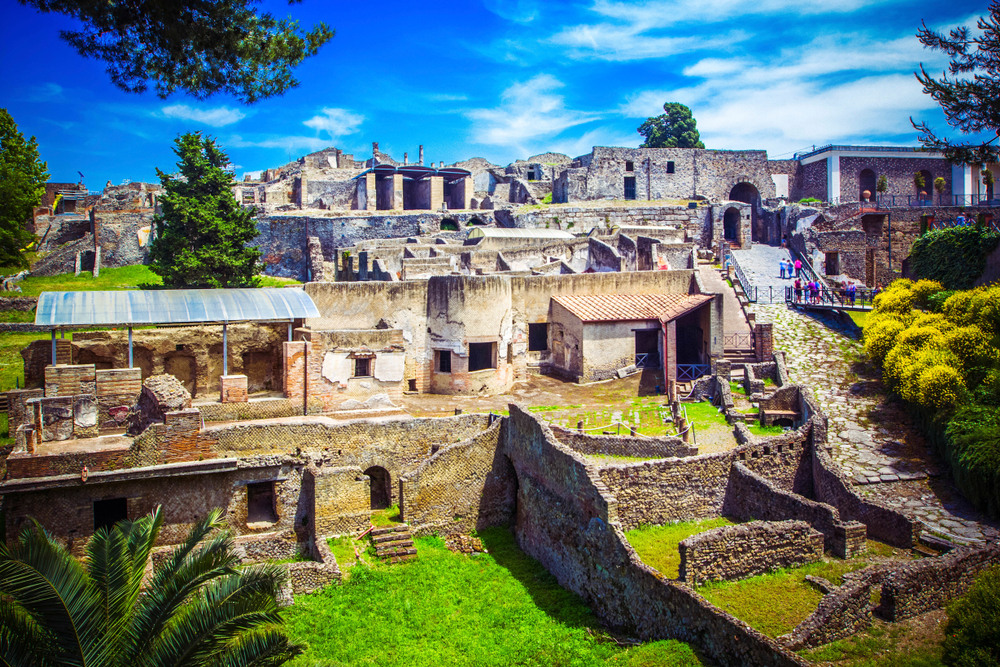
Gladiators, Games, and Fans
Pompeians were passionate about the arena, and the walls reflect it. Painted dipinti advertised upcoming games — listing the sponsor, the number of gladiator pairs, the date, and welcome details such as awnings to shade the crowd from the sun.
Scratched alongside these official notices are the fans' own records. Graffiti tally individual fighters' victories and losses, sometimes with admiring nicknames. One famous scribble calls the gladiator Celadus "the heartthrob of the girls" (suspirium puellarum), suggesting that star fighters drew the same swooning attention as modern celebrities. Others record the grim arithmetic of the arena: so many fights, so many wins, and the final note of who survived. The popularity of these spectacles is part of the wider culture of Pompeii, which prized both refinement and raw entertainment.
Love, Lust, and Loneliness
If politics and gladiators fill the public walls, the private graffiti overflow with the heart. Pompeii preserves a remarkable archive of love — tender, bawdy, jealous, and heartbroken.
Some are simple declarations: "Marcus loves Spendusa." Others rise to genuine poetry, borrowing or adapting verses from Ovid and Propertius. One often-quoted couplet sighs, "Lovers, like bees, lead a honey-sweet life" — while another, scratched nearby, retorts that whoever wrote it should rot. There are tributes ("Health to you, Victoria, and wherever you are, may you sneeze sweetly"), pick-up lines, and rejections.
The frankly sexual graffiti cluster, unsurprisingly, in and around the brothel — the Lupanar. Its walls carry blunt boasts and reviews left by clients and workers alike, naming partners and prices. They are crude by any standard, but they are also evidence: the inscriptions record the names of enslaved sex workers who would otherwise be entirely lost to history. The fuller story of the city's reputation, sometimes exaggerated and sometimes earned, is explored in Pompeii: City of Sin and at the Lupanar itself.
Insults, Boasts, and Bodily Humor
Not all wall writing was romantic. Pompeii's graffiti can be wonderfully petty. People recorded debts, traded insults, and bragged. "Chie, I hope your haemorrhoids rub together so much they hurt worse than they ever have before," reads one memorable curse aimed at an enemy.
Then there is the bluntly scatological. "Secundus defecated here," announces one wall, with the matter-of-fact confidence of a man making history. Another simply states, "Apollinaris, doctor to the emperor Titus, had a good crap here." This was not vandalism so much as a casual sense that a wall existed to be written on — and that the most ordinary acts deserved a record.
"Gaius Was Here": The Urge to Be Remembered
Perhaps the most relatable category is the oldest human graffito of all: the simple desire to mark one's existence. "Gaius Pumidius Diphilus was here," reads one inscription, complete with a date. The impulse behind it — I was here, I mattered, remember me — is identical to the names carved into desks, trees, and monuments in every age since.
The writers were not blind to the absurdity of their own habit. The single most beloved graffito in all of Pompeii is a tired joke about graffiti itself: "I'm amazed, O wall, that you have not collapsed and fallen, since you bear the tedious scribblings of so many writers." A version of this line appears more than once in the city, suggesting it was a popular jibe — proof that Pompeians could laugh at their own compulsion to deface every available surface.
What the Graffiti Reveal
Taken together, the graffiti in Pompeii rewrite our picture of the Roman world in several ways.
First, literacy. The sheer volume and variety of writing — including misspellings, schoolroom alphabets, and writing practice — shows that reading and writing reached far beyond the elite. Slaves, tradespeople, and women all left their marks, implying a society where basic literacy was widespread and useful in daily commerce and social life.
Second, daily life and economy. Graffiti record prices, debts, tavern tabs, and goods for sale: a jar of wine, a mule for hire, lodgings to let. They are an accidental account book of the ancient street, complementing what we know of the city's trades and economy.
Third, humanity. The politics, the gladiator gossip, the love poems, the insults, and the crude jokes all confirm that the people of Pompeii were not remote marble figures but recognisable, opinionated, funny human beings.
Because most ancient voices come to us filtered through the elite, this unfiltered wall writing is irreplaceable. The eruption that destroyed Pompeii also sealed its plaster — and with it, the candid words of an entire town — beneath protective ash. When archaeologists uncovered those walls, they recovered not just buildings but conversations: the closest thing we have to standing in a Roman street and overhearing the people who lived there.
Related Pages
- The Ancient City of Pompeii — Urban life, architecture, and society in the living city
- Pompeii Culture — Art, religion, and social customs of the community
- Daily Roman Life — How ordinary Pompeians lived day to day
- The Forum — The civic heart where election notices crowded the walls
Pompeii: Small Group Tour with an Archaeologist
See it with an expert — a small-group walk through Pompeii led by a professional archaeologist.
Frequently Asked Questions
How much graffiti is in Pompeii?
More than 11,000 graffiti and inscriptions have been documented across Pompeii, making it the single largest surviving collection of everyday Latin writing in the world. These include scratched messages (graffiti), painted notices (dipinti), election posters, business adverts, and countless personal scribblings on walls, columns, and tombs throughout the city.
What did Pompeii graffiti say?
Pompeii graffiti covered the full range of human life: election endorsements, gladiator results and advertisements, love declarations and poetry, insults, jokes, prices and business adverts, tallies, alphabets, and crude boasts. Much of it is startlingly ordinary — people recording that they were there, who they loved, what they bought, and what they thought of their neighbours.
What is the most famous Pompeii graffiti?
Among the most famous is a weary line scratched on a wall: 'I'm amazed, O wall, that you have not collapsed and fallen, since you bear the tedious scribblings of so many writers.' Others frequently quoted include 'Gaius Pumidius Diphilus was here' and the blunt 'Secundus defecated here,' which together capture both the wit and the bluntness of ancient Roman graffiti.
What does Pompeii graffiti tell us?
Pompeii graffiti reveals that literacy reached far down the social ladder, that politics was loud and public, and that Romans joked, loved, insulted, and boasted much as people do today. Because most surviving Latin literature was written by elites, this everyday wall writing gives historians a rare, unfiltered voice for ordinary Pompeians, including women, slaves, and the working poor.
What is the difference between graffiti and dipinti?
Graffiti (singular graffito, from the Italian for 'scratched') were inscribed into plaster or stone with a sharp tool, usually by individuals on impulse. Dipinti were painted on walls, often professionally, and were typically formal public notices such as election posters or announcements of games. Both survive in Pompeii, but graffiti tend to be more personal and spontaneous.