House of the Faun — Pompeii's Grandest Private Residence
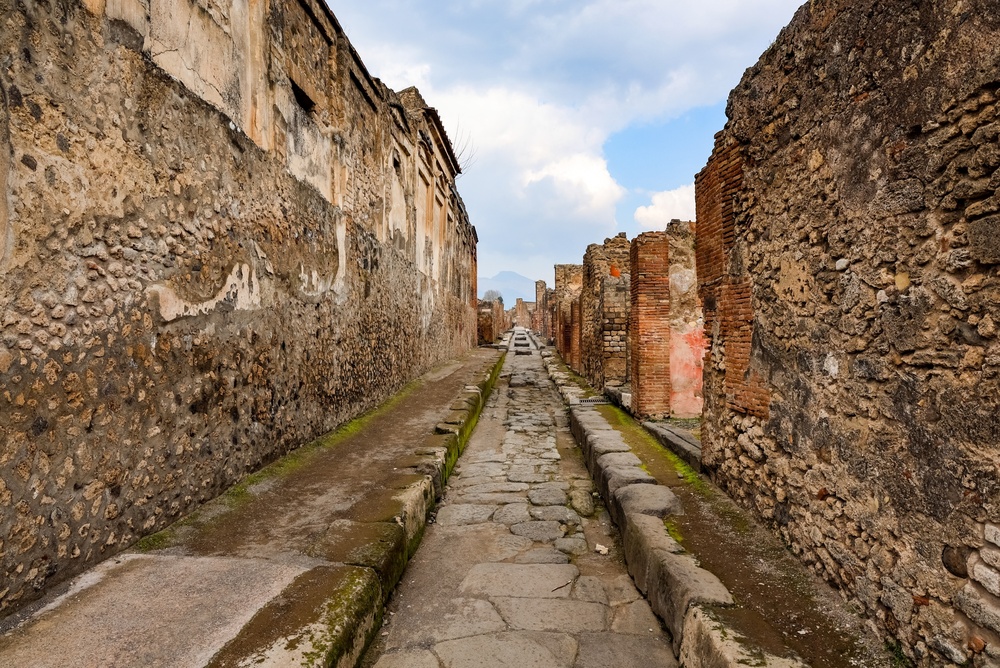
Pompeii's Most Magnificent Residence
The House of the Faun Pompeii (Casa del Fauno) is the largest and most sumptuous private residence in pompeii city, and one of the largest known houses from the entire Roman world. Occupying an entire city block (insula) in Region VI, this extraordinary building covers approximately 3,000 square meters (32,000 square feet) — larger than many of Pompeii's public buildings.
Layout and Architecture
The house is notable for having not one but two atria (reception halls) and two peristyles (colonnaded gardens), reflecting the enormous wealth of its owners. The main entrance on Via della Fortuna is flanked by two shops (tabernae) and features a floor mosaic reading "HAVE" (welcome) in the vestibule.
First Atrium (Tuscan Atrium): The main reception hall, featuring the famous bronze dancing faun in the impluvium. This room would have been used for the salutatio — the daily morning reception of clients by the patron.
Second Atrium (Tetrastyle Atrium): A secondary hall with four columns supporting the roof, likely used for household management and service functions.
First Peristyle: An elegant colonnaded garden with 28 columns, adjacent to the main living quarters.
Second Peristyle (Grand Peristyle): An enormous garden surrounded by 44 columns, occupying the rear half of the property. This monumental space, comparable to public architecture, demonstrates the extraordinary ambitions of the house's owners.
The Alexander Mosaic
The House of the Faun's most famous treasure is the Alexander Mosaic, one of the most celebrated works of art from the ancient world. This floor mosaic, measuring approximately 5.8 by 3.1 meters, depicts the Battle of Issus (333 BC) between Alexander the Great and King Darius III of Persia.
The mosaic is composed of approximately 1.5 million tiny colored stone and glass tesserae (individual tiles), creating an image of extraordinary detail and dynamism. It shows the moment when Alexander, charging from the left on horseback, has penetrated the Persian lines and confronts Darius, who stands in his chariot with an expression of alarm, reaching out toward a fallen soldier.
The original mosaic was removed from the house in 1843 and is now displayed in the Naples National Archaeological Museum. A high-quality reproduction has been installed in the original location.
The Dancing Faun
The small bronze statue that gives the house its modern name is a masterpiece of Hellenistic bronze sculpture, standing approximately 71 cm tall. It depicts a young faun (or satyr) in mid-dance, balanced on one foot with arms raised in joyful motion. The figure is a copy of a Greek original, reflecting the deep appreciation for Greek art among Pompeii's wealthy elite.
The original bronze is in the Naples Archaeological Museum; the statue currently displayed in the house is a copy.
Who Lived Here?
The identity of the house's owners is not definitively established. The house was built in the Samnite period (2nd century BC) and may have belonged to one of the most powerful families in pre-Roman Pompeii. The scale of the house and the quality of its art suggest an owner of extraordinary wealth and cultural sophistication — someone with deep connections to the Hellenistic Greek world.
Pompeii: Small Group Tour with an Archaeologist
See it with an expert — a small-group walk through Pompeii led by a professional archaeologist.
Frequently Asked Questions
What is the House of the Faun?
The House of the Faun (Casa del Fauno) is the largest and most lavishly decorated private residence in Pompeii, covering an entire city block (~3,000 sq meters). It is named after a small bronze statue of a dancing faun found in the impluvium (rainwater collection basin) of the main atrium. The house originally contained the famous Alexander Mosaic, now in the Naples Archaeological Museum.
Where is the Alexander Mosaic now?
The original Alexander Mosaic, found on the floor of the House of the Faun, is displayed at the Naples National Archaeological Museum (MANN). A high-quality reproduction has been placed in the original location within the House of the Faun at Pompeii.