Roman House Layout — Domus Floor Plan & Rooms
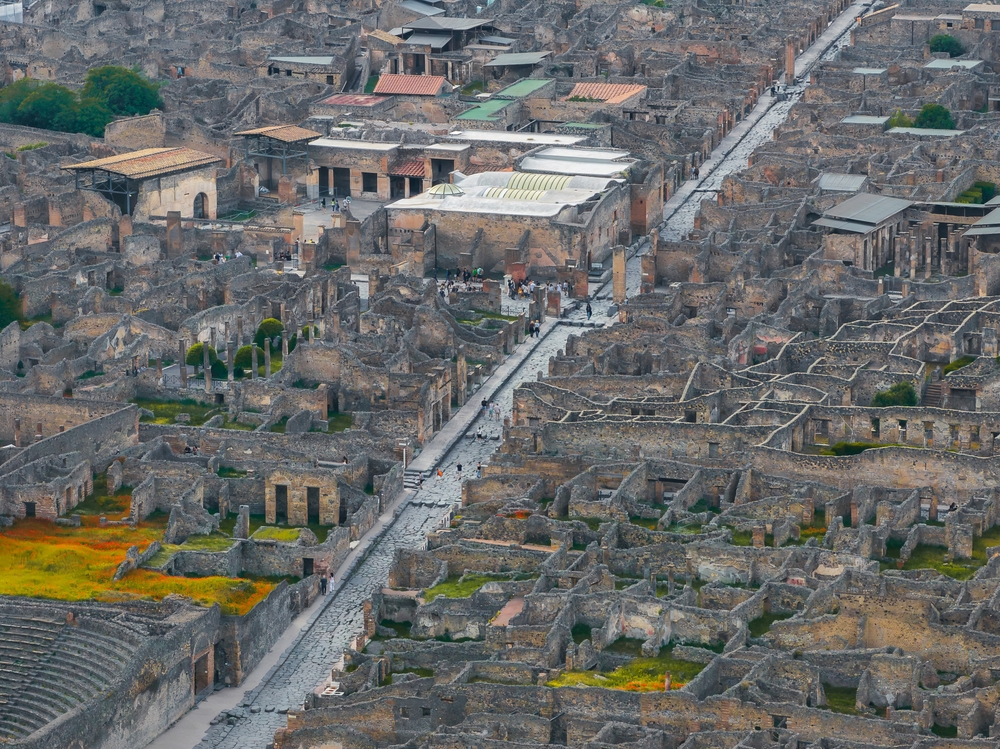
The Roman House Layout, Front to Back
The Roman house layout followed a clear front-to-back sequence along a central axis. A visitor entered through the fauces, crossed the atrium with its central pool, passed the tablinum reception room, and reached the open peristyle garden, with the dining room and kitchen beyond. This roman domus floor plan stayed remarkably consistent across the Roman world.
The Sequence of Spaces
Walking through a domus from the street, the parts of a roman house appeared in this order:
- Fauces / vestibulum — the narrow entrance passage from the street.
- Atrium — the tall central hall, partly open to the sky, with the impluvium pool.
- Cubicula — small bedrooms opening off the sides of the atrium.
- Alae — open alcoves or "wings" flanking the far end of the atrium.
- Tablinum — the master's study and reception room, set on the main axis.
- Peristyle — the colonnaded garden at the heart of larger homes.
- Triclinium — the formal dining room, usually opening onto the garden.
- Culina — the kitchen, a small service room often near the latrine.
- Posticum — the back door, used by servants and for deliveries.
At the street front, tabernae (shops) often flanked the entrance on either side, run by the household or rented to tradespeople.
Room-Name Glossary
These roman house names come straight from Latin. Keep this table handy as you explore the rest of the site:
| Latin name | Function in the house |
|---|---|
| fauces / vestibulum | Entrance passage from the street |
| atrium | Central hall with rainwater pool |
| impluvium | Shallow basin catching rainwater |
| compluvium | Roof opening above the impluvium |
| cubiculum (pl. cubicula) | Bedroom / private sleeping room |
| ala (pl. alae) | Open alcove beside the atrium |
| tablinum | Study and formal reception room |
| peristylium | Colonnaded garden courtyard |
| triclinium | Dining room with three couches |
| culina | Kitchen |
| posticum | Rear service door |
| taberna (pl. tabernae) | Street-front shop or workshop |
| lararium | Household shrine to the family gods |
Public Front, Private Back
The plan split the house into zones. The atrium and tablinum were semi-public, where the master received clients during the morning salutatio. The peristyle, triclinium and cubicula were more private, reserved for family and invited guests. This gradient from public to private explains why the layout mattered as much for social display as for comfort.
Variations on the Plan
Not every house matched the textbook domus floor plan. Smaller homes might skip the peristyle entirely, while grand houses like the House of the Faun in Pompeii had two atria and two peristyles. As land grew scarce, some owners absorbed neighbouring shops or added upper floors. Still, the core sequence — entrance, atrium, tablinum, garden — remained the recognisable signature of the Roman house.
To see how these spaces worked in practice, continue to the atrium, the tablinum, the peristyle, and the other rooms of the domus.
Pompeii: Small Group Tour with an Archaeologist
See real Roman houses standing in Pompeii — walk the streets with a professional archaeologist.
Frequently Asked Questions
What was the typical layout of a Roman house?
A typical Roman domus ran in a straight line from the street: a narrow entrance (fauces) led to the atrium with its rainwater pool, flanked by bedrooms (cubicula) and alcoves (alae). Behind the atrium lay the tablinum, then the peristyle garden, with the dining room, kitchen and a back door beyond.
What are the rooms in a Roman house called?
Key Roman house names include the fauces (entrance), atrium (central hall), cubicula (bedrooms), alae (alcoves), tablinum (study), peristyle (garden), triclinium (dining room), culina (kitchen), posticum (back door) and tabernae (street-front shops). Each had a fixed function within the domus floor plan.
Why were Roman houses laid out front to back?
The front-to-back axis created a deliberate sightline: a visitor at the door could see straight through the atrium and tablinum to the garden beyond. This advertised the family's wealth and order, while the symmetrical plan controlled light, air and the flow of guests through public and private zones.
Did Roman houses have shops?
Yes. Many town houses had tabernae — small shops or workshops — opening onto the street at the front, on either side of the main entrance. They were often rented out or run by the household, and usually had no internal connection to the private living rooms behind them.