The Roman House (Domus) — How Ancient Romans Lived
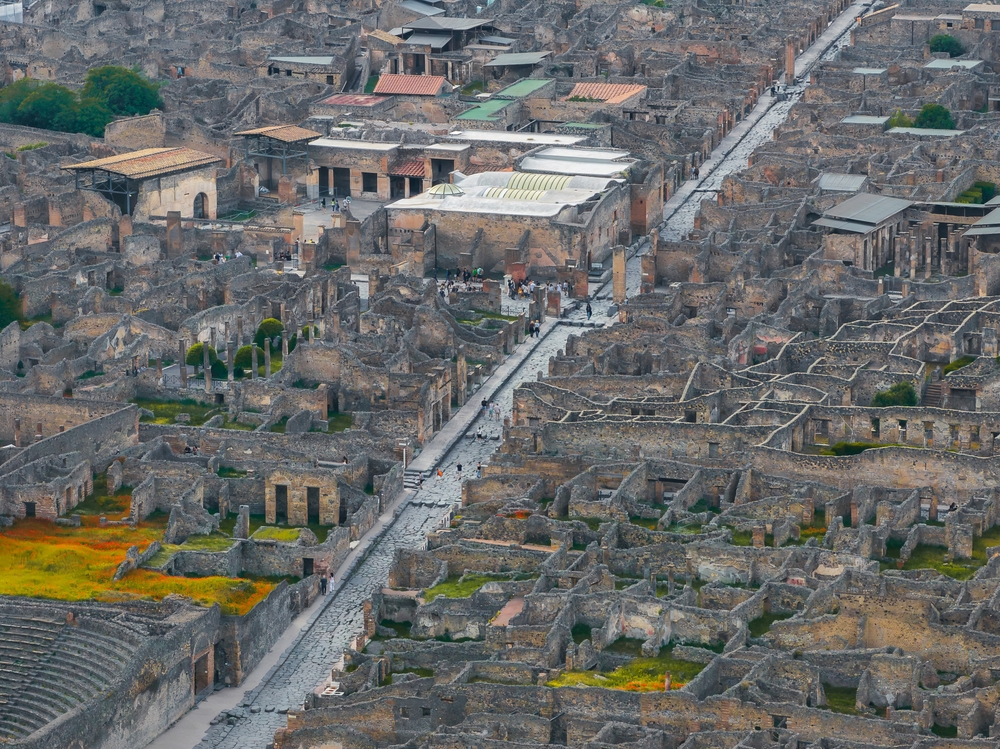
What Was a Roman House?
A Roman house, or domus, was the single-family townhouse of a well-off Roman family. It was inward-looking: blank, almost windowless walls faced the street, while life unfolded around an open central hall called the atrium and, in larger homes, a colonnaded peristyle garden behind it. To picture what Roman houses looked like, imagine a sequence of rooms wrapped around light and water.
Three Kinds of Roman Home
The domus was only one of three places Romans lived, and the differences mattered socially:
- Domus — the private town house of a wealthy family, built around an atrium and garden. This is the "classic" ancient Roman house.
- Insula — a multi-storey apartment block, often with shops below, where most ordinary city residents rented cramped rooms. The poor lived here.
- Villa — a larger estate in the countryside, frequently combining a luxurious roman home with a working farm or vineyard.
A single rich family might own a domus in town and one or more villas beyond the walls. The roman houses that survive best are the urban domus of Pompeii, because the 79 AD eruption sealed them under ash.
The Main Parts of the Domus
The domus had a recognisable set of rooms, each with a Latin name and a clear function. This table is your map to the rest of this guide:
| Part | Latin name | What it was |
|---|---|---|
| Entrance | fauces / vestibulum | Narrow passage from the street into the house |
| Central hall | atrium | Tall hall, partly open to the sky, with a rainwater pool |
| Rainwater basin | impluvium | Shallow pool catching rain, feeding a cistern below |
| Bedrooms | cubicula | Small private sleeping rooms off the atrium |
| Study / office | tablinum | Reception room where the master received clients |
| Garden | peristyle | Colonnaded open garden at the heart of larger homes |
| Dining room | triclinium | Formal dining room with three couches |
| Kitchen | culina | Service room for cooking, usually small and smoky |
| Shops | tabernae | Street-front rooms rented out or run by the household |
Built Around Light and Water
The genius of the domus was its handling of light and rainwater. The atrium roof sloped inward to an opening (the compluvium), funnelling rain into the impluvium basin and then into an underground cistern. Beyond it, the peristyle garden brought greenery, fountains and air into the centre of the home. Because the house turned its back on the noisy street, these inner spaces stayed cool, private and bright.
Where to See Roman Houses
Pompeii preserves the best surviving examples of the domus anywhere in the Roman world. Two stand out:
- House of the Faun — one of the largest private homes in Pompeii, famous for its bronze dancing faun and the Alexander Mosaic.
- House of the Vettii — a richly frescoed merchants' house with a beautifully restored peristyle garden.
Both sit inside the Pompeii Archaeological Park (open roughly 09:00–19:00 in summer, 09:00–17:00 in winter; confirm current ticket details at pompeiisites.org).
Explore Each Part in Detail
This page is the hub. Follow the spokes to go deeper:
- The full room-by-room layout of the domus, front to back.
- The atrium, the central hall just inside the door.
- The impluvium rainwater basin and cistern system.
- The tablinum, the master's study and reception room.
- The peristyle garden at the heart of the home.
- The other rooms — bedrooms, dining and service spaces.
- The Roman villa and how it differed from the town house.
- The interior decoration of frescoes, mosaics and furniture.
- How houses fit into the wider city.
Pompeii: Small Group Tour with an Archaeologist
See real Roman houses up close — explore with an expert archaeologist in a small group.
Frequently Asked Questions
What did Roman houses look like?
A wealthy Roman house, or domus, looked plain on the outside but opened inward. Visitors passed through a narrow entrance into a tall atrium with a central rainwater pool, then on to reception rooms and, in larger homes, a colonnaded peristyle garden ringed by bedrooms, dining rooms and a kitchen.
What is a Roman domus?
A domus was the single-family townhouse of a well-off Roman family. Unlike the crowded insula apartment blocks where poorer city-dwellers lived, or the rural villa, the domus was a private urban home built around an atrium and often a garden, combining living space with rooms for business and entertaining guests.
What is the difference between a domus, an insula and a villa?
The domus was the town house of a single wealthy family. The insula was a multi-storey apartment block where most ordinary city residents rented rooms. The villa was a larger country estate, often combining a luxurious residence with a working farm. All three appear in and around Pompeii.
Where can I see a real Roman house today?
Pompeii preserves the finest surviving Roman houses, buried and protected by the 79 AD eruption of Vesuvius. The House of the Faun and the House of the Vettii are the best-known examples, with intact atria, gardens, mosaics and frescoes you can walk through inside the Archaeological Park.