Ancient Roman House Interior — Inside the Domus
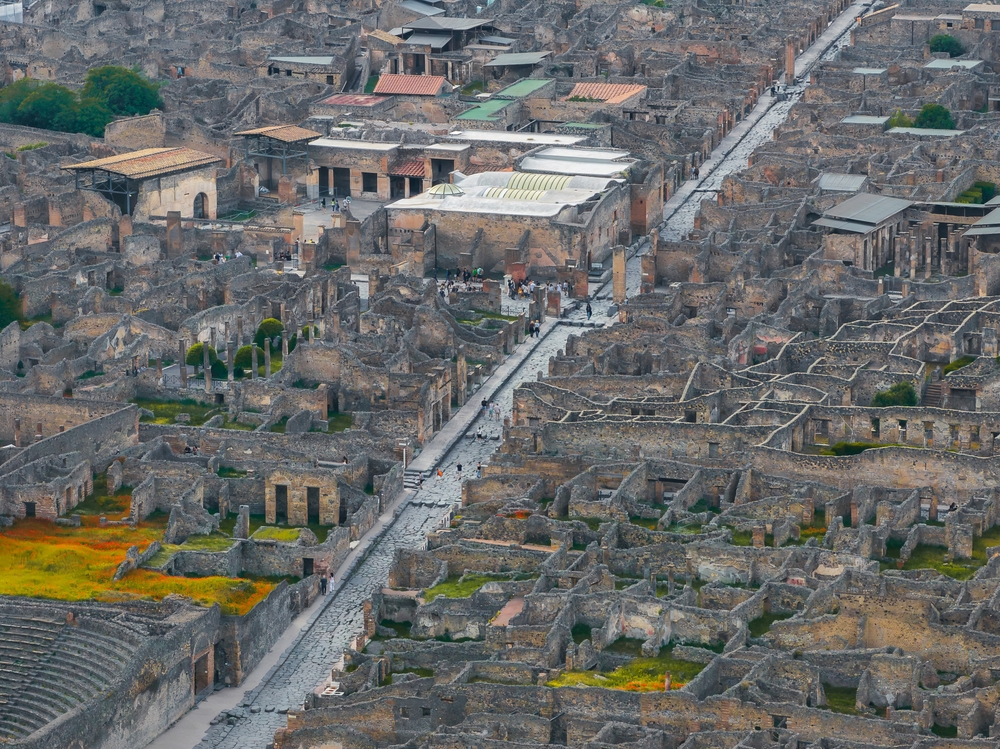
Inside an Ancient Roman House
The interior of an ancient Roman house was defined by its decorated surfaces rather than its furnishings. Walls carried richly coloured frescoes, floors were laid in mosaic, and rooms opened onto the bright atrium and peristyle for light. Movable furniture was sparse — a few couches, tables and chests — and status was displayed through décor, not clutter.
Frescoed Walls: The Four Pompeian Styles
Almost every wall in a comfortable Roman home was plastered and painted. Pompeii preserves the full sequence of Roman wall-painting fashions, known as the Four Pompeian Styles:
- First (Masonry) Style — painted plaster imitating coloured marble blocks.
- Second (Architectural) Style — illusionistic columns, windows and landscapes that opened the wall into imaginary depth.
- Third (Ornate) Style — flat, elegant monochrome grounds framing small refined motifs.
- Fourth Style — fantastical architecture combined with framed mythological panels, the look most common in AD 79.
Mosaic Floors and Surfaces
Floors were a second canvas. Entrances might carry a guard-dog mosaic with the warning cave canem, while reception rooms and dining rooms displayed geometric patterns or detailed figural scenes in tiny tesserae. In humbler rooms the floor was often opus signinum — crushed terracotta and lime studded with small white stones. Together, painted walls and mosaic floors did the decorative work that wallpaper and rugs do today.
Sparse Movable Furniture
By modern standards Roman rooms looked almost empty. Households owned only a handful of movable pieces:
- Couches (lectus) — used both for sleeping in the cubiculum and for reclining at meals in the triclinium.
- Tables — small wooden or bronze tables, sometimes with marble tops, set beside the couches.
- Chests and cupboards — freestanding storage, since rooms had no built-in closets.
- Stools and chairs — light, portable seating moved where needed.
- Braziers — bronze charcoal heaters carried from room to room for warmth.
- Oil lamps (lucernae) — terracotta or bronze lamps providing dim evening light.
Light, Air and the Roman Living Room
Roman domestic architecture solved lighting through openings rather than windows. The atrium drew daylight down through the compluvium roof opening, collecting rainwater in the impluvium below, while the rear peristyle garden flooded the living and dining rooms with sun and fresh air. There was no single "living room" in the modern sense; daily life flowed between the atrium, the garden and the triclinium depending on the season and the time of day.
Rich Roman Houses: Status Through Décor
In rich Roman houses wealth announced itself through quality, not quantity. A grand domus impressed visitors with a deep axial view from the door through the atrium to a sunlit garden, with the finest frescoes and mosaics reserved for the rooms guests would see. The result was an interior that felt spacious, ordered and luminous — the hallmark of the Roman style home.
Pompeii: Small Group Tour with an Archaeologist
See real Roman houses standing in Pompeii — walk the streets with a professional archaeologist.
Frequently Asked Questions
What did the inside of an ancient Roman house look like?
The interior of a Roman house was defined by its surfaces, not its furniture. Walls were covered in vivid frescoes painted in one of the Four Pompeian Styles, floors were laid in mosaic, and light entered through the atrium's roof opening and the peristyle garden. Movable furniture was sparse: a few couches, tables, chests and lamps. Status was shown through décor rather than clutter.
What furniture did Romans have in their homes?
Romans owned relatively little movable furniture. The main pieces were the lectus (couch, used for both sleeping and dining), small wooden or bronze tables, stools and chairs, and chests or cupboards for storage since there were no built-in closets. Bronze braziers provided heat and oil lamps gave light. Rooms felt open and uncluttered compared with modern homes.
What are the Four Pompeian Styles?
The Four Pompeian Styles are the sequence of Roman wall-painting fashions identified at Pompeii. The First (Masonry) Style imitated marble blocks; the Second created illusionistic architecture and deep space; the Third favoured delicate ornament on flat coloured grounds; and the Fourth combined fantasy architecture with framed mythological scenes. They let archaeologists date a room's decoration.
How did Romans light and heat their houses?
Daylight reached interior rooms through the atrium's central roof opening (compluvium) and the open peristyle garden, so rooms were arranged around these light sources. After dark, small oil lamps (lucernae) of terracotta or bronze provided dim light. For warmth, portable bronze braziers burned charcoal, while the wealthiest homes and bath suites used hypocaust underfloor heating.