Pompeii and Herculaneum Tour — See Both Roman Cities
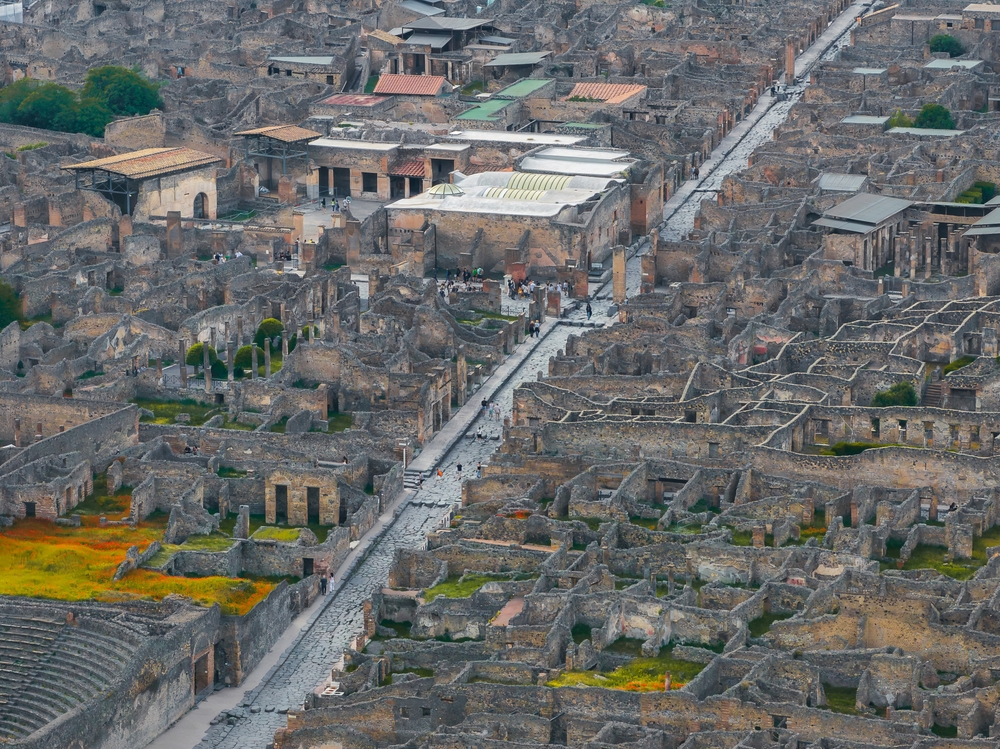
Pompeii and Herculaneum in One Trip
A Pompeii and Herculaneum tour pairs the two most famous victims of Vesuvius: the sprawling city of Pompeii and its smaller, better-preserved neighbour, Herculaneum. Both were destroyed by the same AD 79 eruption of Mount Vesuvius, yet they were buried in different ways — and seeing them together is the best way to understand what really happened that day.
The two sites sit only about 20 km apart on the same Circumvesuviana train line, so combining them is easy, whether on a guided day trip or independently using the 48-hour combined ticket.
Why See Both?
Pompeii and Herculaneum tell two halves of the same story:
- Pompeii shows the scale of a Roman town — a full street grid, the Forum, the amphitheatre, bathhouses, bakeries and the plaster casts of its victims.
- Herculaneum shows the detail. Sealed under a deep, hot pyroclastic flow, it preserved things Pompeii could not: wooden roof beams, second storeys, furniture, doors, and carbonised food. It is smaller, more intimate and usually far less crowded.
For a deeper comparison, see our Herculaneum vs Pompeii guide.
Tour Types Compared
| Tour type | Typical length | What's included | Best for |
|---|---|---|---|
| Full-day guided (both sites) | 7–8 hrs | Transport, guide at both sites, skip-the-line entry | Seeing both with context in one day |
| Half-day Herculaneum only | 3–4 hrs | Guide, skip-the-line entry | Adding Herculaneum to a Pompeii trip |
| Small-group archaeologist | flexible | Expert-led depth at both sites | History lovers and repeat visitors |
| Independent (combo ticket) | 2 days | 48-hour combined ticket, self-guided | Flexibility and lower cost |
Prices vary by season and operator, so check current rates on each listing before booking.
What's Usually Included
- Skip-the-line entry to both the Pompeii and Herculaneum archaeological parks
- A licensed guide or personal audio device at each site
- Round-trip transport from Naples or Sorrento, or a meeting point at each entrance
- A planned route through the highlights of both cities
How to Combine Them Independently
Both sites are direct stops on the Circumvesuviana railway (Naples–Sorrento line): "Ercolano Scavi" for Herculaneum and "Pompei Scavi – Villa dei Misteri" for Pompeii. The combined Pompeii + Herculaneum ticket is valid for 48 hours, so you can see Herculaneum one day and Pompeii the next without buying two separate tickets. Check current prices and combo details on our Pompeii tickets page.
Planning Your Visit
Give Herculaneum around 2 hours and Pompeii at least half a day. If you only have one day, an organised full-day tour handles the transport and timing for you; if you have two, the combo ticket lets you take each site at your own pace. Either way, wear sturdy shoes and bring water — both sites are large, uneven and exposed to the sun. Compare more options on our tours from Naples page.
Pompeii & Herculaneum: Small-Group Tour with an Archaeologist
See both cities buried by Vesuvius — an expert archaeologist leads a small group with skip-the-line entry.
Frequently Asked Questions
Can you visit Pompeii and Herculaneum in one day?
Yes. The two sites are only about 20 km apart on the same Circumvesuviana train line, and Herculaneum is much smaller — around 2 hours is enough there, versus a half day at Pompeii. Many combined day tours from Naples or Sorrento cover both, and the combined Pompeii + Herculaneum ticket is valid for 48 hours, so you can also split them across two days.
Is a combined Pompeii and Herculaneum tour worth it?
If you have the time, yes. Herculaneum was buried differently from Pompeii — by hot pyroclastic surges rather than falling ash — so it preserved wooden balconies, upper floors, furniture and even food. Seeing both gives a fuller picture of the AD 79 disaster: Pompeii for scale and streets, Herculaneum for astonishing detail.
What's the difference between Pompeii and Herculaneum?
Pompeii was a large commercial town of around 12,000 people, buried under metres of ash and lapilli. Herculaneum was a smaller, wealthier seaside town, sealed by a deep, hot mud-and-ash flow that carbonised and preserved organic material. Pompeii is bigger and busier to visit; Herculaneum is more compact, better preserved and usually far less crowded.
Which should I see first, Pompeii or Herculaneum?
On a combined tour, most itineraries do the smaller Herculaneum in the morning and the larger Pompeii after, or vice versa depending on transport. If visiting independently on the 48-hour combo ticket, start with whichever is easier from your base — both are direct stops on the Circumvesuviana line from Naples and Sorrento.