Rooms in a Roman House — Names & Functions
What Rooms Did a Roman House Have?
A Roman house (domus) was organised around two open spaces — the atrium and the rear peristyle garden — with rooms named for their function: the vestibulum and fauces (entrance passage), cubiculum (bedroom), ala (open alcove), tablinum (office), triclinium (dining room), culina (kitchen), latrina (toilet) and posticum (back door).
Entrance: Vestibulum, Fauces and Tabernae
The vestibulum was a recessed forecourt or threshold between the street and the front door, and the fauces (literally "throat") was the narrow entrance corridor leading from it into the atrium. Many town houses rented out their street-facing rooms as tabernae — shops or workshops that opened onto the pavement and were often run by tenants or freedmen, generating rental income for the owner.
Living and Sleeping: Cubiculum and Alae
A cubiculum was a small bedroom or private chamber, typically just large enough for a bed (lectus) and a chest. Roman houses had several, opening off the atrium or peristyle. The alae were two open "wings" flanking the atrium near the tablinum; lacking doors, they extended the atrium visually and are thought to have held ancestral masks and family archives.
The Heart of the House: Tablinum and Triclinium
The tablinum sat on the central axis between the atrium and the peristyle. It was the master's study and reception office, where he kept records and received clients during the morning salutatio; sliding partitions or curtains let it be opened to the garden view or closed for privacy.
The triclinium was the formal dining room, named for its three couches set around three sides of a table so diners could recline while eating. Grand houses had more than one — a shaded summer triclinium beside the garden and an enclosed winter one — and these were among the most richly decorated rooms in the home.
Service Spaces: Culina, Latrina and Posticum
The culina (kitchen) was usually small, smoky and tucked toward the rear of the house near the service quarters, often with a masonry hearth. The latrina (toilet) was frequently placed next to the kitchen so they could share a drain. The posticum was the plain rear servants' door, opening to a side alley so deliveries and household staff bypassed the formal rooms entirely.
Roman House Room Glossary
| Latin name | English | Function |
|---|---|---|
| vestibulum | entrance forecourt | recessed threshold between street and front door |
| fauces | entry passage | narrow corridor from the door into the atrium |
| atrium | central hall | roofed reception space with a central light well |
| ala (pl. alae) | wing / alcove | open recess off the atrium, near the tablinum |
| cubiculum | bedroom | small private sleeping chamber |
| tablinum | study / office | master's record room between atrium and garden |
| triclinium | dining room | room with three dining couches for reclining |
| culina | kitchen | cooking area with a masonry hearth |
| latrina | toilet | latrine, usually beside the kitchen drain |
| peristylium | colonnaded garden | columned courtyard garden at the rear |
| posticum | rear door | back servants' entrance to a side street |
| taberna | shop | street-facing room rented as a shop or workshop |
How the Rooms Worked Together
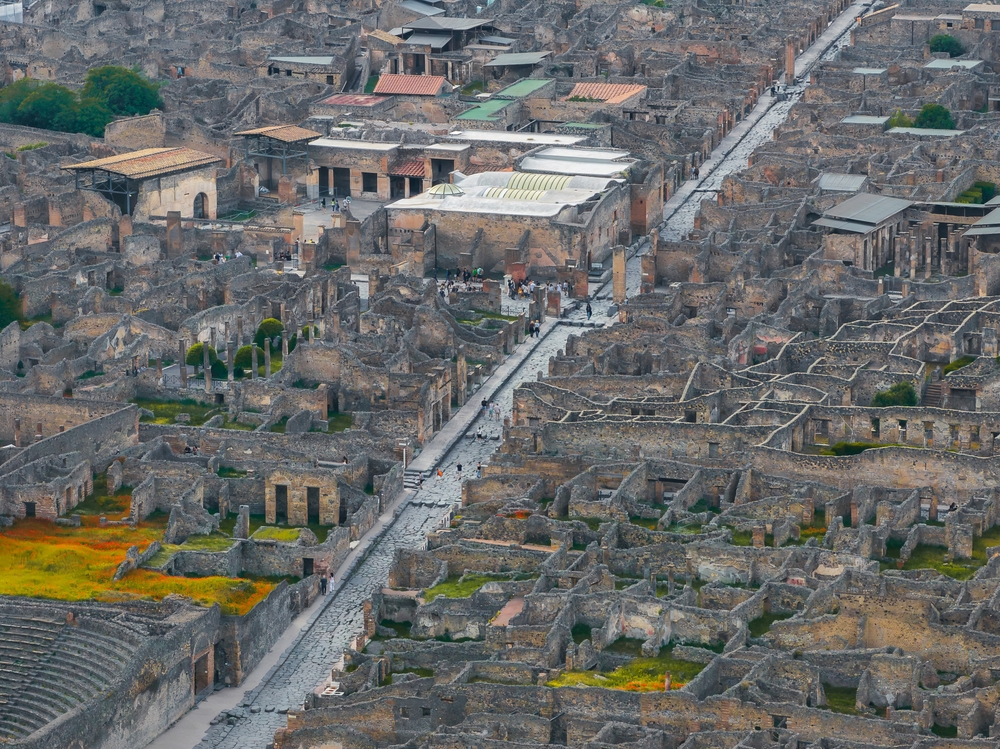
Movement through a domus followed a deliberate axis: a visitor entered through the fauces, crossed the bright atrium, and faced the tablinum framing a view of the garden beyond. Public, status-displaying rooms sat at the front, private and service rooms toward the back — a layout you can still trace today in the houses of Pompeii.
Pompeii: Small Group Tour with an Archaeologist
See real Roman houses standing in Pompeii — walk the streets with a professional archaeologist.
Frequently Asked Questions
What were the rooms in a Roman house called?
A Roman domus combined the vestibulum and fauces (entry passage), cubicula (bedrooms), alae (open alcoves off the atrium), the tablinum (study/office), the triclinium (dining room), the culina (kitchen), the latrina (toilet), the posticum (rear servants' door) and tabernae (shops fronting the street). Each had a defined social or practical function.
What was a triclinium used for?
The triclinium was the Roman dining room, named for its three couches (klinai) arranged around three sides of a low table. Up to nine diners reclined on their left elbows to eat. Wealthy homes often had a summer triclinium open to the garden and a separate winter one, and the finest had elaborate frescoes and mosaic floors.
What is a posticum in a Roman house?
The posticum was the rear or back door of a Roman house, usually a small, plain entrance opening onto a side street or alley. It allowed servants, deliveries and discreet visitors to come and go without passing through the formal atrium and tablinum where the owner received guests, keeping service traffic separate from public reception space.
What were the alae in a Roman house?
The alae (singular ala, meaning 'wings') were two open recesses or alcoves set on either side of the atrium, near the tablinum. They had no doors and opened directly onto the atrium. Scholars believe they may have displayed ancestral wax masks (imagines) and family records, reinforcing the owner's lineage and status.