Temple of Venus Pompeii — The Patron Goddess
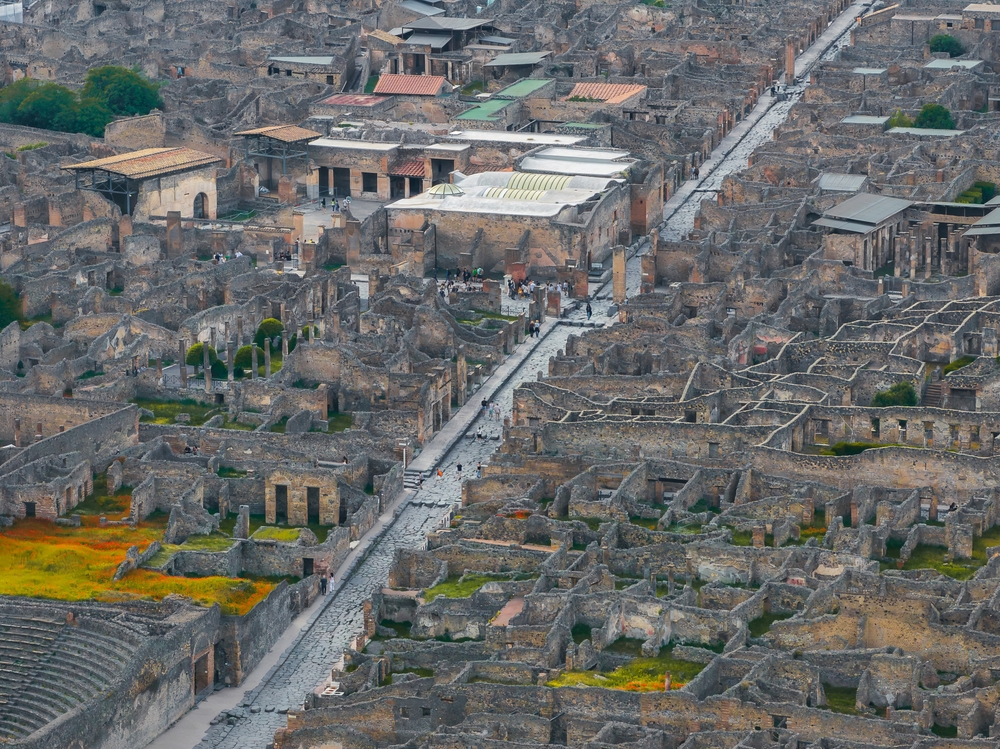
The Patron Goddess of Pompeii
Venus — worshipped here as Venus Pompeiana (also called Venus Fisica) — was the patron deity of Pompeii. Her temple stood on a raised terrace near Porta Marina, overlooking the Sarno plain and the sea. Largely ruined today, it was being rebuilt on a grander scale after the 62 AD earthquake when Vesuvius struck.
A Temple With a View
The location was no accident. Set on a terrace at the southwestern edge of the city, the Temple of Venus looked out over the Sarno river plain and the Bay of Naples, dominating the approach from the harbour. Travellers arriving by sea and walking up through the Porta Marina gate would have seen Venus's sanctuary rising above them — a fitting welcome from the goddess who protected the town. Its prominent siting underlines just how central her cult was to Pompeian identity.
Venus Pompeiana and Venus Fisica
In Pompeii, Venus was more than the goddess of love. Her local titles reveal her broader civic role:
- Venus Pompeiana — the goddess in her specific guise as protector of the city.
- Venus Fisica — an epithet linking her to nature, fertility, and generative power.
- Associations with the sea and safe voyages, fitting for a goddess whose temple overlooked the harbour.
- A guardian of commerce and good fortune for a busy trading town.
- A figure of civic pride, depicted in frescoes crowned, jewelled, and sometimes holding a rudder.
Why So Little Survives
The earthquake of 62 AD severely damaged the original temple, as it did much of Pompeii. Rather than simply repair it, the city embarked on an ambitious reconstruction intended to make Venus's sanctuary larger and more magnificent than before. That work was still in progress when Mount Vesuvius erupted in AD 79, burying the unfinished building site. As a result, visitors today see mostly the terrace platform, foundation walls, and scattered column fragments rather than a standing temple.
Seeing It Today
The Temple of Venus is one of the first significant ruins you reach after climbing up through Porta Marina, so it makes a natural opening to any visit. Pair it with the nearby Forum and the much older Temple of Apollo, which together show the range of Pompeii's religious architecture. While little of the structure remains, the panoramic outlook over the plain helps explain why the city placed its patron goddess on this commanding spot. For more on the city's gateways, see our Porta Marina guide.
Pompeii: Small Group Tour with an Archaeologist
See it with an expert — a small-group walk through Pompeii led by a professional archaeologist.
Frequently Asked Questions
Who was the patron goddess of Pompeii?
Venus was the patron deity of Pompeii, worshipped here in her local form as Venus Pompeiana, sometimes also called Venus Fisica. The city dedicated its most prominently sited temple to her, overlooking the Sarno plain and the sea, reflecting her central role in civic and religious identity.
Where is the Temple of Venus in Pompeii?
The temple stood on a raised terrace near the Porta Marina entrance, in the southwestern corner of the city. Its elevated position gave it commanding views over the Sarno river plain and the Bay of Naples, making it the first major monument many ancient visitors saw on arrival from the harbour.
Why is the Temple of Venus largely ruined?
The temple was heavily damaged by the earthquake of AD 62 and was still being rebuilt — on an even grander scale — when Vesuvius erupted in AD 79. The reconstruction was never finished, so today only foundations, terrace walls, and scattered architectural fragments survive.
What does Venus Pompeiana mean?
Venus Pompeiana is the specifically local cult form of the Roman goddess Venus as worshipped in Pompeii. Frescoes show her crowned and richly dressed, sometimes holding a rudder, linking her to the sea, fertility, and the protection of the city and its commerce.