Garden of the Fugitives — Pompeii's Victim Casts
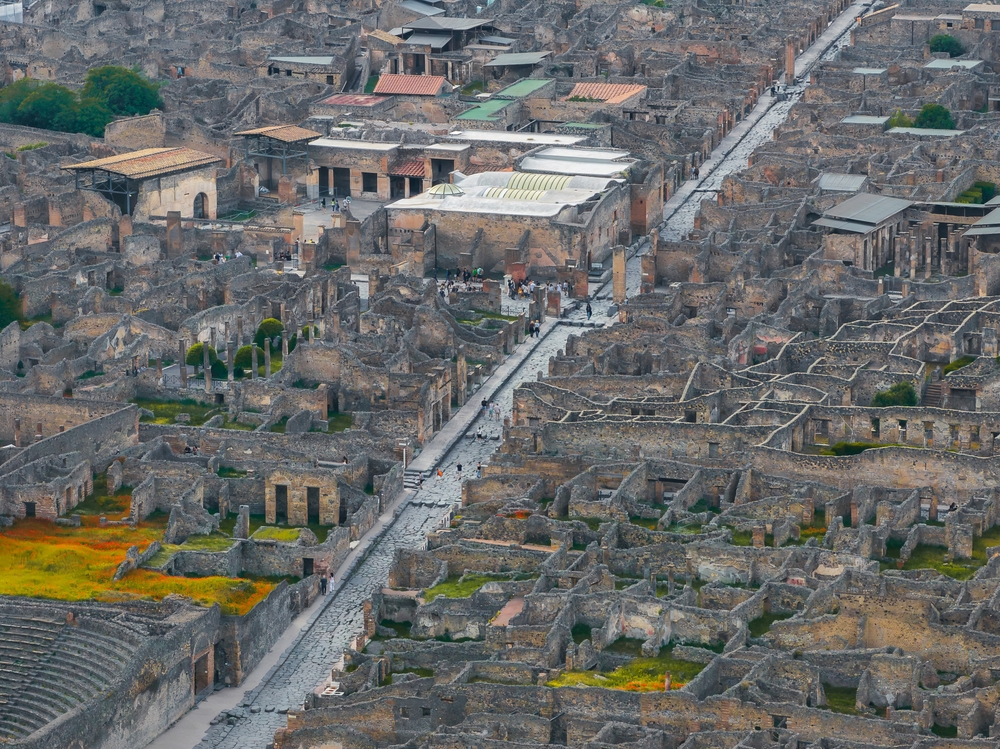
What Is the Garden of the Fugitives?
The Garden of the Fugitives is a former vineyard in Region I of Pompeii where 13 victims — the so-called fugitives — were caught by the deadly pyroclastic surge while fleeing toward the Sarno Gate. Their plaster casts lie behind glass exactly where they fell, making this one of the most moving stops in the city.
Why It Matters
Many of Pompeii's famous body casts have been moved to museums or display cases scattered across the site. What sets the Garden of the Fugitives apart is that the casts remain in situ — in the precise location where these people died. Standing at the edge of the old vineyard, you see a group of men, women, and children frozen mid-flight, having almost reached the city wall before the superheated surge cloud overtook them on the morning of the eruption.
The garden itself was a working vineyard, one of several productive green spaces inside the city walls. Archaeologists identified the rows of vine roots from cavities in the soil and have replanted grapes here, so the setting today still resembles the agricultural plot it was in AD 79.
The 13 Fugitives
The group captures a cross-section of ordinary Pompeians caught in a single tragic moment:
- Adults and children together, suggesting families trying to escape as a unit.
- Several figures lying face-down or curled low to the ground, instinctively shielding themselves from the heat and ash.
- Postures that preserve clothing folds, sandals, and personal gestures — raised arms, covered faces.
- Their position near the wall shows they were heading for the Sarno Gate (Porta di Nocera), hoping to reach open country beyond the city.
- The casts were created using the plaster injection technique pioneered by Giuseppe Fiorelli, who realized the voids in the ash were perfect molds of the dead.
How the Casts Were Made
When a victim's body decomposed inside the hardened ash, it left a hollow cavity that preserved the exact outline of the person. Excavators drilled a small hole, poured in liquid plaster, let it set, then chipped away the surrounding ash to reveal a three-dimensional figure. The result is not a skeleton or a mummy but a sculptural impression of a human being in their final seconds. You can read more about this on our how they were preserved page.
Visiting Tips
The garden is in the far southeast of the site, so it pairs naturally with a visit to the nearby amphitheatre and Via dell'Abbondanza. Approach quietly — this is a place of reflection, not a photo backdrop. The casts are behind protective glass, which can reflect sunlight, so view them from an angle and avoid using flash. To see where Pompeii's other casts are displayed, consult our where to see the bodies guide.
Pompeii: Small Group Tour with an Archaeologist
See it with an expert — a small-group walk through Pompeii led by a professional archaeologist.
Frequently Asked Questions
What is the Garden of the Fugitives in Pompeii?
The Garden of the Fugitives is a former vineyard in Region I where 13 people were overwhelmed by the volcanic surge while trying to flee toward the Sarno Gate. Their plaster casts are displayed behind glass exactly where they fell, making it one of the most moving sites in the entire archaeological park.
How many bodies are in the Garden of the Fugitives?
Thirteen victims, known collectively as the fugitives, were caught here during the AD 79 eruption. They include adults and children who died together as a group while attempting to escape the city. Their casts capture their final postures, lying low to the ground against the deadly pyroclastic surge.
Are the Garden of the Fugitives casts real bodies?
The casts are not bodies but plaster forms. When excavators found cavities left by decomposed victims in the hardened ash, they poured liquid plaster inside to recreate the exact shape of each person at the moment of death, preserving clothing folds, facial features, and gestures.
Where is the Garden of the Fugitives located in Pompeii?
It sits in Region I, in the southeastern part of the city near the Sarno Gate (Porta di Nocera). It is one of the more distant stops from the main Porta Marina entrance, so allow time to walk across the site or plan your route to include the amphitheatre nearby.