Pompeii: The Ancient City — Life, Culture & Architecture
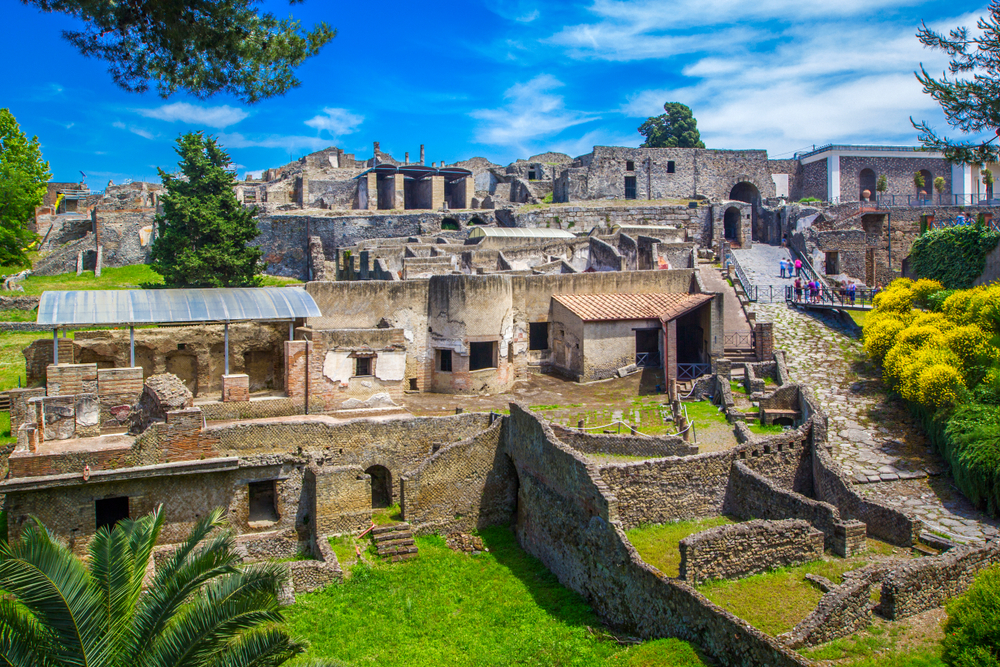
Pompeii as a Living Ancient City
Before the eruption of 79 AD transformed it into an archaeological site, the Pompeii ancient city was a thriving, bustling community filled with the noise, smells, and energy of daily life. Often described as Pompeii a city frozen in time, the site preserves daily Roman life in extraordinary detail. Understanding Pompeii as it was — a living, breathing community — is essential to fully appreciating what was lost when Vesuvius erupted.
Urban Planning
The Pompeii city layout followed a modified Hippodamian grid plan, with streets laid out in a roughly regular pattern of intersecting thoroughfares. The city was enclosed by walls approximately 3 kilometers in circumference, pierced by eight gates that regulated access. Two main east-west streets (decumani) and several north-south streets (cardines) divided the city into roughly rectangular blocks (insulae).
The streets themselves were paved with large polygonal blocks of basalt (volcanic stone), and elevated sidewalks lined both sides. At intersections, raised stepping stones allowed pedestrians to cross without stepping into the water and waste that flowed through the streets. The ruts worn into the stone by centuries of cart wheels are still clearly visible today — a vivid reminder that the Pompeii ancient city was once a place of constant movement and commerce.
Architecture and Building Types
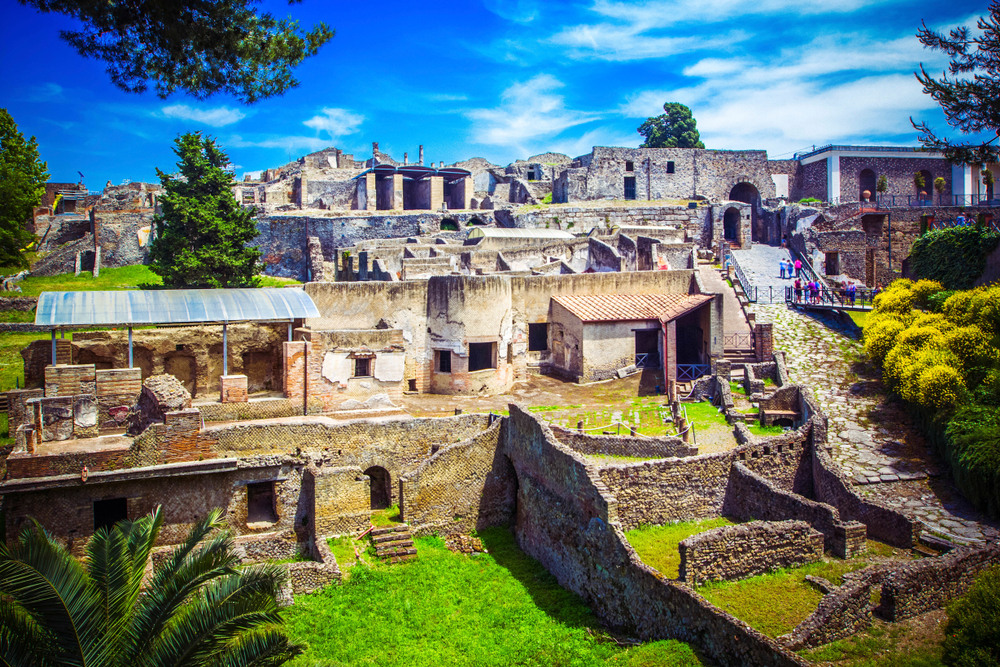
Pompeii's architecture reflected its diverse history and prosperous economy. The city contained:
Private Houses (Domus): Wealthy Pompeians lived in elaborate houses organized around an atrium (a central open hall) and often a peristyle (a colonnaded garden). These homes featured mosaic floors, painted walls, private baths, and elaborate water features. The House of the Faun and the House of the Vettii are among the finest surviving examples.
Apartment Buildings (Insulae): Less wealthy residents lived in multi-story apartment buildings, many of which had shops or workshops on the ground floor. These buildings were simpler in construction and decoration but provide important evidence of middle and lower-class Roman life.
Public Buildings: The Forum served as the civic center, surrounded by temples, government offices, the Basilica (law courts), and the Macellum (food market). Two theatres, an amphitheatre, multiple bath complexes, and numerous temples served the city's cultural and religious needs.
Commercial Buildings: Pompeii had a thriving commercial sector including tabernae (shops), thermopolia (fast-food counters), pistrinae (bakeries with their own mills), fullonicae (laundries), and workshops for various trades.
Social Structure
Roman Pompeii had a clearly defined social hierarchy. At the top were the local aristocracy (decuriones) who served on the city council and competed for elected offices like duovir (chief magistrate) and aedile (public works official). Evidence of political campaigns survives in the form of painted election notices (programmata) on building facades throughout the city.
The middle class included merchants, shopkeepers, and successful tradespeople. Below them were freedmen (former slaves who had gained their liberty) and at the bottom of the social ladder, enslaved people, who constituted a significant portion of the population and performed much of the manual labor.
Women in Pompeii had more public visibility than in many other parts of the Roman world. Some owned businesses, and one, Eumachia, was the patroness of the fullers' guild and built one of the largest buildings on the Forum.
Daily Life
Daily life in Pompeii revolved around familiar routines. Romans rose early, ate a light breakfast (ientaculum) of bread and cheese, and went about their business. The main meal (cena) was eaten in the mid-afternoon and could be an elaborate affair in wealthy households, with multiple courses served while diners reclined on couches.
Public baths were central to social life. Pompeii had at least four major bath complexes where residents could exercise, bathe, socialize, and conduct business. The baths were open to all social classes, with separate hours or sections for men and women.
Entertainment included theatrical performances, gladiatorial games in the amphitheatre, and public festivals. Pompeii's amphitheatre, built around 70 BC, is the oldest known permanent stone amphitheatre in the Roman world and could seat approximately 20,000 spectators — far more than the city's population, drawing crowds from surrounding communities. Walking through the Pompeii ancient city today, visitors experience a Pompeii city frozen in time — streets, shops, and homes preserved almost exactly as they were nearly two millennia ago.
Pompeii: Small Group Tour with an Archaeologist
Walk the ancient city itself — explore with an expert archaeologist in a small group.
Frequently Asked Questions
How big was ancient Pompeii?
Ancient Pompeii covered approximately 66 hectares (163 acres) within its city walls, which ran for about 3 km. The city had a population of roughly 11,000 permanent residents, with additional people from surrounding rural areas who came to the city for markets and events.
What language did Pompeians speak?
By 79 AD, the primary language of Pompeii was Latin, as the city had been a Roman colony for over 150 years. However, traces of the older Oscan language (the native language of the Samnites who previously controlled the city) can still be found in some inscriptions, and Greek was known by educated residents.