Why Pompeii Is Famous — What the City Is Known For
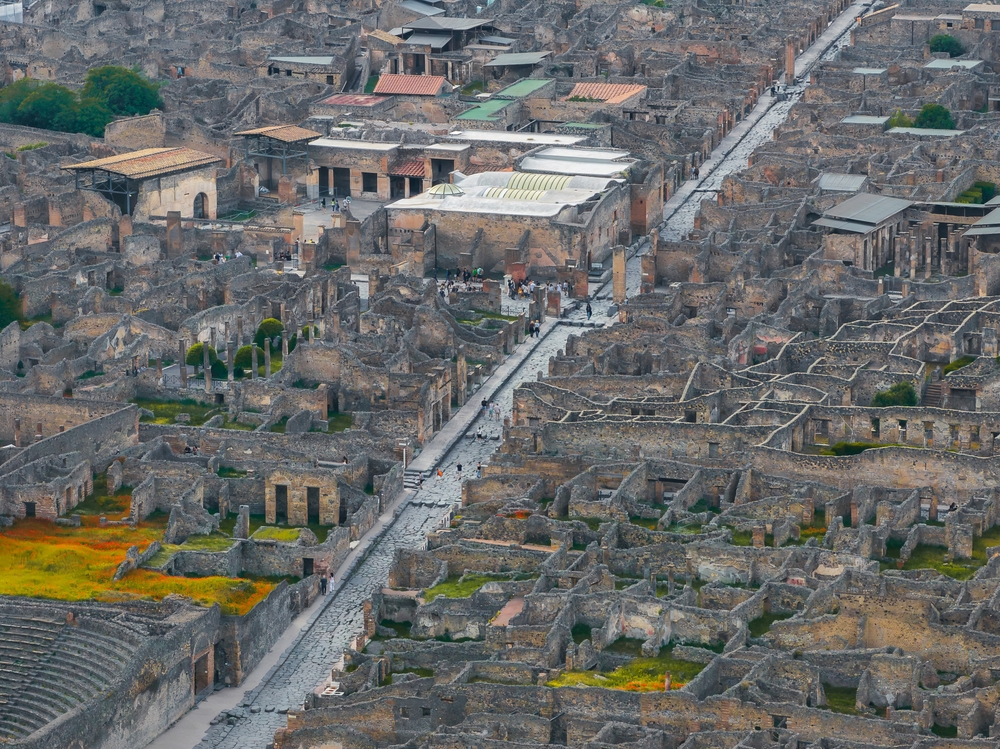
Why Is Pompeii Famous?
Pompeii is famous because the 79 AD eruption of Mount Vesuvius buried and froze an entire Roman city in time. Ash and pumice sealed streets, houses, frescoes, graffiti, food and even the body casts of victims, giving an unmatched snapshot of everyday Roman life. It is one of the world's most visited archaeological sites and a UNESCO World Heritage Site.
No other ancient site offers the same combination of scale and completeness. Most Roman towns were abandoned slowly, reused, robbed of their stone and built over. Pompeii was different: a thriving town of roughly 11,000 people was sealed in a matter of hours, then forgotten for about 1,500 years. When excavations began in 1748, they revealed not ruins picked clean by time, but a place where ordinary life had simply stopped.
What Pompeii Is Known For
Pompeii's fame rests on a handful of remarkable qualities that combine in one place:
- A complete city, frozen in time. Streets, drains, fountains, shops, bakeries, public baths and private homes survive in their original layout, so you can walk a real Roman town rather than imagine one.
- The body casts. Plaster poured into the voids left by victims captured their final postures, clothing and facial expressions, making the human cost of the disaster unforgettable.
- Vivid wall paintings and mosaics. Pompeii preserves the richest surviving collection of Roman frescoes, from mythological scenes to garden views, in their original rooms.
- Everyday detail. Graffiti, election notices, shop signs, loaves of bread, jars of garum and household objects reveal how real Romans worked, ate, argued and amused themselves.
- Famous monuments. The Forum, the large amphitheatre (one of the oldest surviving stone arenas), the Lupanar brothel and grand houses like the House of the Faun draw visitors from around the world.
- A turning point for archaeology. The methods developed at Pompeii, including Giuseppe Fiorelli's casting technique and the region-and-insula numbering system, helped create modern excavation practice.
Why Pompeii Is Important
Because the town was buried in a single catastrophic event, it works almost like a time capsule. Scholars can study diet, health, trade, religion, politics and town planning from direct physical evidence rather than later guesswork. Carbonised seeds, animal bones, plumbing, ovens and painted advertisements all survive together, in context, which is extraordinarily rare in the ancient world.
This is also why Pompeii matters far beyond Italy. The eruption that destroyed it is one of the most studied volcanic events in history, helping volcanologists understand the behaviour of Vesuvius and similar volcanoes. The site shapes how museums, films and books picture Roman antiquity, and millions of people each year come to see it for themselves.
A Unique Archaeological Site
What truly sets Pompeii apart is authenticity and completeness. The buildings stand where they always stood, the paintings remain on the walls they decorated, and the objects sit where they were dropped. Visitors do not look at reconstructions; they look at the genuine fabric of a Roman town. That is why Pompeii, together with nearby Herculaneum and Oplontis, is recognised as a World Heritage Site and why it remains one of the most powerful places to understand the ancient world.
Pompeii: Small Group Tour with an Archaeologist
See for yourself why Pompeii is famous — explore with an expert archaeologist in a small group.
Frequently Asked Questions
Why is Pompeii so famous?
Pompeii is famous because the 79 AD eruption of Mount Vesuvius buried it under ash so quickly that an entire Roman city was frozen in time. Streets, houses, shops, frescoes, graffiti, food and even the body casts of victims survived, giving an unmatched snapshot of everyday Roman life found nowhere else.
What is Pompeii known for?
Pompeii is best known for its astonishing state of preservation: complete Roman streets and buildings, vivid wall paintings, public bathhouses, the amphitheatre, the brothel, and the plaster casts of people and animals caught in the eruption. It is one of the world's most visited archaeological sites and a UNESCO World Heritage Site.
Why is Pompeii important to archaeology?
Because it was sealed in a single day, Pompeii preserves a Roman town exactly as it was in 79 AD, rather than slowly abandoned and rebuilt. This lets archaeologists study daily life, diet, art, religion and town planning with rare precision, which is why Pompeii helped shape modern archaeology.
What makes Pompeii a unique archaeological site?
Most ancient sites were abandoned gradually and stripped over centuries. Pompeii was buried intact in hours and forgotten for around 1,500 years, so its homes still hold furniture, paintings and personal objects in place. That completeness and authenticity is why UNESCO inscribed it as a World Heritage Site.