Things to Do in Pompeii: Top Sights and Highlights
The Best Things to Do in Pompeii
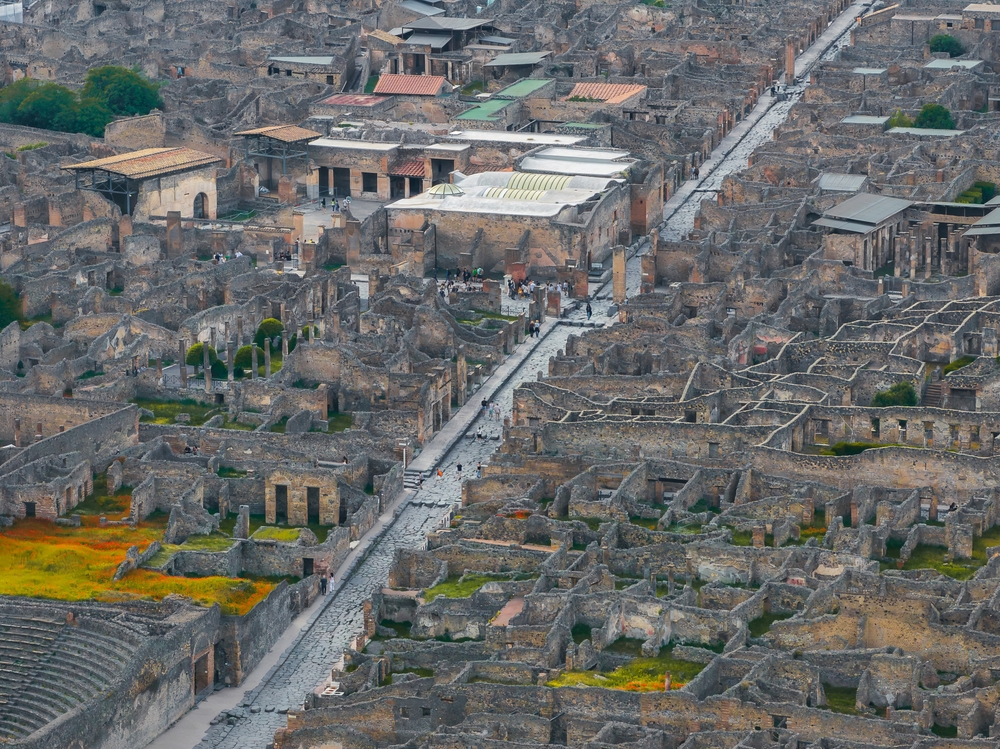
Few places reward a day of exploration like the buried city beneath Vesuvius. If you are wondering what to see in Pompeii, the answer is simple: an entire Roman town frozen in time, from grand civic monuments to humble street-corner snack bars. This guide gathers the best things to see in Pompeii into a curated highlights list, then turns them into a practical route so you can spend your time exploring rather than backtracking.
There is no shortage of things to do in Pompeii — the excavated area covers roughly two-thirds of a 66-hectare city — but a handful of sites stand out as genuinely unmissable. Below are the top sights Pompeii has to offer, each with a sentence to orient you and a link to a fuller page. For a complete index of every monument, browse the places directory.
Pompeii Highlights: The Must-See Sites
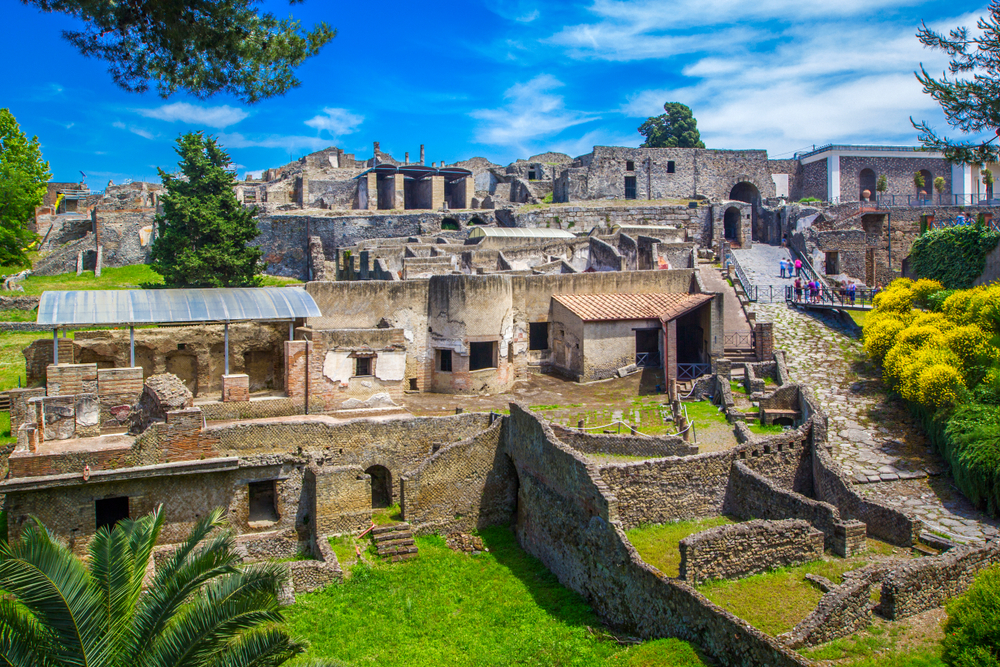
These are the Pompeii highlights most visitors travel for. Treat this as your shortlist when deciding what to do in Pompeii with limited time.
The Forum
The civic, religious, and commercial heart of the ancient city, framed by columns with Vesuvius looming behind — the most photographed spot in Pompeii and the natural place to begin. See the Forum guide for what once stood here.
The Amphitheatre
Built around 70 BC, the Amphitheatre is the oldest surviving Roman amphitheatre in the world, predating Rome's Colosseum by more than a century. It seated some 20,000 spectators for gladiatorial games.
The Villa of the Mysteries
Often named the single best thing to see, the Villa of the Mysteries is a suburban villa famous for its vivid Dionysiac frescoes — a near-complete cycle depicting a mysterious initiation rite, painted in the celebrated "Pompeian red."
The House of the Faun
The grandest private residence in Pompeii, the House of the Faun takes its name from a bronze dancing satyr. It is where the spectacular Alexander Mosaic, showing Alexander the Great in battle against Darius, was found.
The Lupanar
The best-preserved brothel in the city, the Lupanar is a small two-storey building whose erotic wall paintings and stone beds give a frank glimpse into Roman social life. It is one of the most-visited and most talked-about stops.
The Temple of Apollo
One of the oldest sanctuaries in Pompeii, the Temple of Apollo sits just beside the Forum. Its colonnade, altar, and bronze statue of Apollo (a copy now stands in place) make it a serene counterpoint to the bustle of the civic square.
The Thermopolium
A thermopolium was the ancient equivalent of a street-food counter, with large jars (dolia) set into a masonry bench to keep food and drink ready to serve. Pompeii has dozens; the most famous, with its brightly painted counter, is a vivid reminder that this was a living, working town.
The Stabian Baths
The oldest and largest bath complex in the city, the Stabian Baths show the full sequence of a Roman bathing ritual — changing room, cold, warm, and hot rooms — with beautifully preserved stucco vaulting and plunge pools.
The Garden of the Fugitives
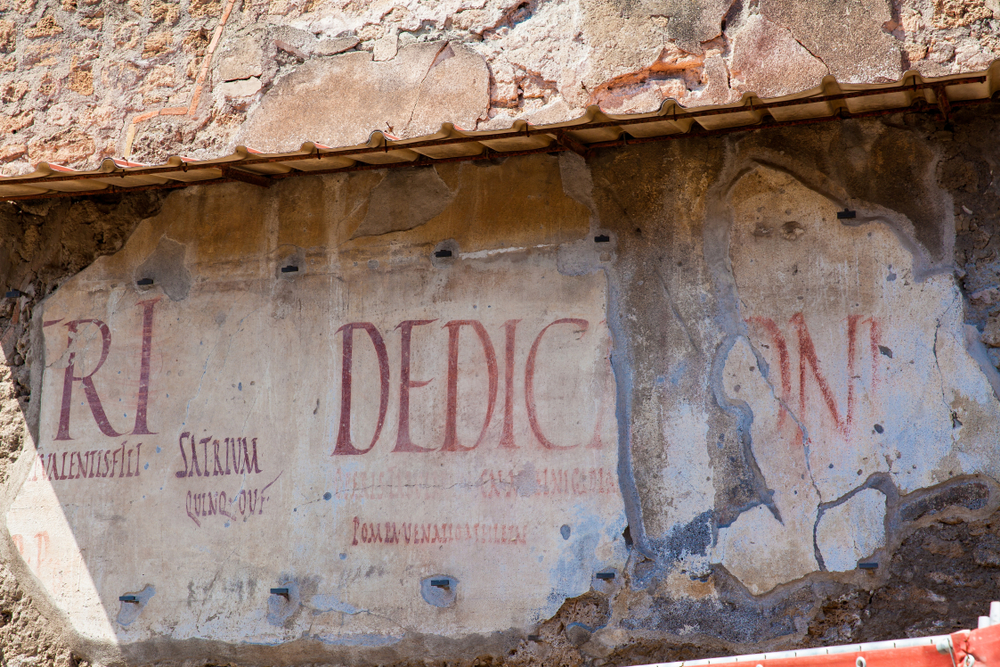
Perhaps the most moving stop in Pompeii, the Garden of the Fugitives displays plaster casts of thirteen victims who died together as they tried to flee the eruption. The casts, made by pouring plaster into the voids left in the ash, capture the human reality of 79 AD like nothing else on site.
The Forum Granary
The Forum Granary (Granai del Foro) once stored grain; today its iron grilles protect rows of stored artifacts and casts — amphorae, household objects, and several poignant body casts. It is an open-air storeroom that doubles as one of the most affecting things to do in Pompeii.
The Large Theatre
Carved into a natural slope, the Large Theatre seated around 5,000 spectators for plays and performances and is still used for events today. Beside it, the smaller roofed Odeon hosted music and poetry recitals.
For deeper coverage of every building above and many more, the full places directory lists each monument with photographs and history.
Suggested Itinerary
How you string these sights together depends on how much time you have. Both routes below assume you enter at the main Porta Marina gate near the Pompei Scavi train station. If you arrive at the Piazza Anfiteatro entrance, simply reverse the order.
Half-Day Highlights (2-3 hours)
Ideal if you are combining Pompeii with Naples, Herculaneum, or a Vesuvius trip in the same day.
- Forum and Temple of Apollo — the civic heart, right inside the gate.
- Forum Granary — pause at the casts and stored artifacts beside the square.
- Stabian Baths — the best-preserved bathhouse, a short walk east.
- House of the Faun — the grand mansion and Alexander Mosaic.
- Lupanar — the brothel, tucked into a side street nearby.
- Large Theatre and Thermopolium — finish in the theatre district before exiting.
This route keeps you in the western and central city and skips the long walk east — perfect when you are short on time but still want the marquee sights.
Full-Day Exploration (5-7 hours)
For travellers who want to see everything Pompeii has to offer, add the eastern half to the half-day route.
- Complete the half-day highlights above (allow 2-3 hours).
- Walk the Via dell'Abbondanza, the city's main commercial street, eastward.
- Garden of the Fugitives — the plaster casts in their vineyard setting.
- Amphitheatre and the adjoining Great Palaestra (exercise ground).
- Loop back via the residential quarters to the Villa of the Mysteries, which sits just outside the city walls to the northwest.
The Villa of the Mysteries is a 10-15 minute walk from the Forum, so plan it as either your first or last stop to avoid crisscrossing the site.
Practical Tips Before You Go
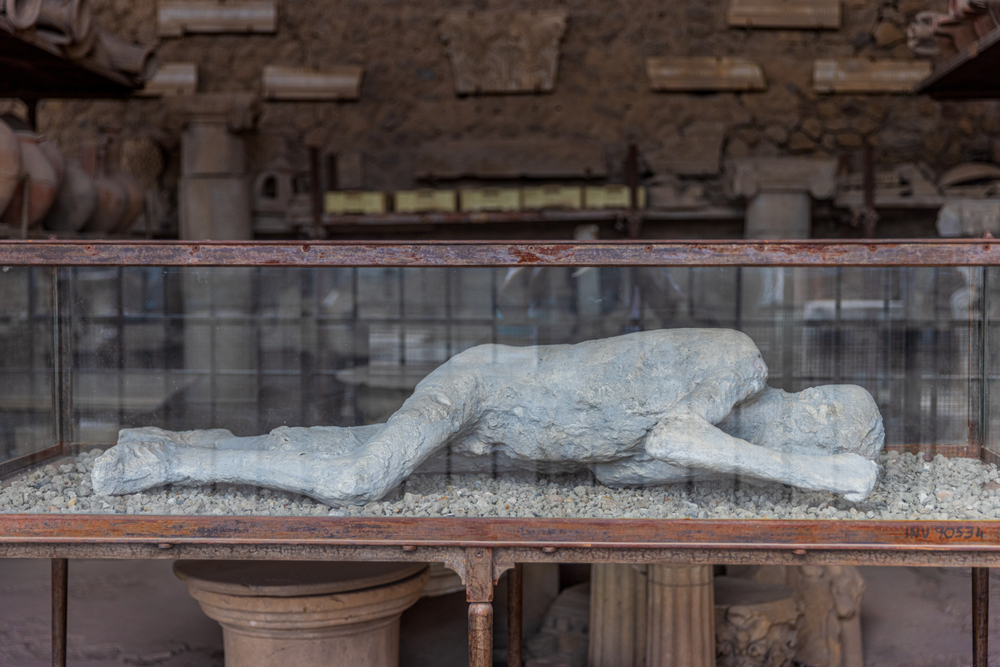
A little preparation makes the difference between a rushed visit and a memorable one.
- Allow 3-5 hours. That is the sweet spot for covering the highlights without exhausting yourself. A full circuit of the excavated city takes a 6-8 hour day.
- Wear good shoes. The streets are paved with uneven basalt blocks and original stepping stones. Sturdy, closed walking shoes with grip are essential — sandals and heels are a mistake.
- Bring water. There is very little shade and on-site food is limited. Carry at least 1.5 litres per person in summer and refill at the drinking fountains (nasoni) dotted around the site.
- Download a map. Signage inside the park is sparse. Download a site map or the free MyPompeii app before you arrive, and consider an audio guide or a small-group tour to bring the ruins to life — see whether you need a guide in our main visitor guide.
- Start early or go late. Arriving at opening (09:00) or in the last two hours beats both the heat and the tour-bus crowds.
- Book ahead. Skip the queue by buying timed-entry tickets online in advance, especially in peak season and on free-entry days.
For everything else — opening hours, facilities, accessibility, and the layout of the site — read our archaeological park guide, and use the interactive site map to plan your exact route between the highlights above.
So, what to do in Pompeii? Walk its streets, stand in its Forum, peer into its homes, and let two thousand years collapse into an afternoon. No photograph quite prepares you for the scale and intimacy of the place — which is exactly why it remains one of the great travel experiences in the world.
Related Pages
Skip-the-Line Ticket with Audio Guide
Tick off every highlight — skip the entrance queue with an instant ticket and self-guided audio tour.
Frequently Asked Questions
What are the must-see things in Pompeii?
The essential highlights are the Forum, the Amphitheatre (the oldest surviving Roman amphitheatre), the Villa of the Mysteries with its Dionysiac frescoes, the House of the Faun, the Lupanar, and the Garden of the Fugitives with its plaster casts. Most visitors can cover these in 3-5 hours.
How long do you need at Pompeii?
Allow 3-5 hours for a satisfying visit covering the main highlights. A complete circuit of the excavated city can take a full day of 6-8 hours. If you only have a couple of hours, focus on the western half around the Forum.
What is the best thing to see in Pompeii?
The Villa of the Mysteries is widely regarded as the single best sight, thanks to its almost perfectly preserved Dionysiac fresco cycle. The Forum and the House of the Faun's Alexander Mosaic are close rivals.
Can you see Pompeii in a few hours?
Yes. With 2-3 hours and a planned route from the Porta Marina entrance, you can see the Forum, the Temple of Apollo, the Stabian Baths, the House of the Faun, the Lupanar, and the Large Theatre. You will miss the far eastern sites such as the Amphitheatre.
Do you need a guide for Pompeii?
A guide is not required, but it greatly enriches the experience. Many buildings have little signage, so a guide, audio guide, or the free MyPompeii app helps you understand what you are seeing. Independent visitors should download a map before arriving.