Pompeii Streets — Roads, Stepping Stones & Walls
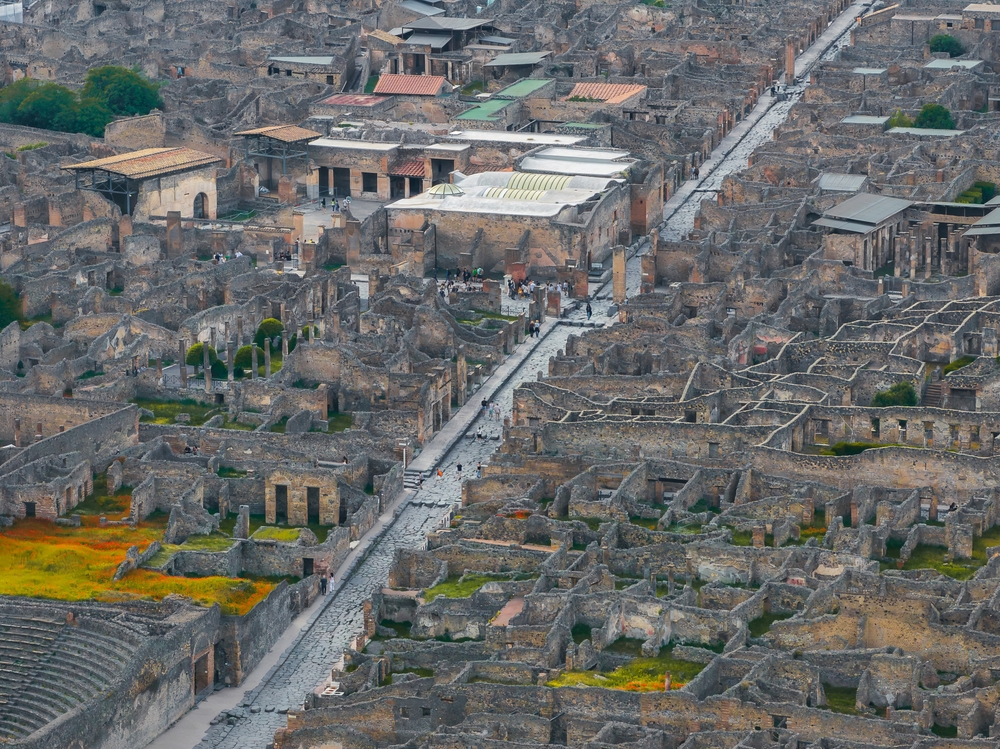
How Were Pompeii's Streets Built?
Pompeii's streets were paved with large polygonal blocks of basalt, a hard local volcanic stone, fitted tightly together. They had raised sidewalks on either side and stepping stones for crossing, and most still show deep ruts worn into the surface by centuries of cart traffic. The result is one of the best-preserved Roman street networks anywhere.
Stepping Stones and Drainage
The most striking feature for visitors is the set of raised stepping stones that span many crossings. Pompeii's streets did double duty as drainage channels, carrying rainwater, runoff and waste downhill toward the gates. Because the roadway could be wet or dirty, the stepping stones let pedestrians cross without stepping into the water or waste below.
These blocks were carefully positioned. The gaps between them were spaced to match the standard axle width of Roman carts, so wheels could roll through the openings while the body of the cart cleared the raised stones. It is an elegant piece of urban engineering hidden in plain sight.
Sidewalks, Ruts and Wear
Pedestrians walked on raised sidewalks set above the roadway, keeping them clear of traffic and water. Down the centre, the basalt paving carries deep parallel cart ruts ground into the stone by iron-shod wheels over generations. In some places the ruts are so worn they reveal how heavily certain streets were used for trade and transport.
The Main Arteries
Pompeii follows a roughly rectangular grid, and two streets dominate it.
| Street | Direction | Role |
|---|---|---|
| Via dell'Abbondanza | East–west | Main commercial artery, lined with shops, bars and houses |
| Via Stabiana | North–south | Principal cross-axis linking the gates |
| Via di Nola | East–west | Major route toward Porta Nola |
| Via Consolare | Toward Porta Ercolano | Approach from the northwest |
| Vicolo del Lupanare | Side lane | Narrow back street, home to the Lupanar |
Via dell'Abbondanza is the busiest and most rewarding to walk, threading from the Forum through the heart of the city past fountains, bakeries and election notices painted on the walls.
The City Walls and Gates
Pompeii was ringed by a defensive wall circuit roughly three kilometres long, built and rebuilt over centuries. The walls were pierced by several gates that funneled road traffic into the grid — among them Porta Marina, Porta Ercolano, Porta Nola, Porta Vesuvio and Porta Stabia. Today these gates double as the modern park entrances and orientation points; Porta Marina is the gate nearest the train station and the best place to begin a walk through the ancient streets.
Pompeii: Small Group Tour with an Archaeologist
See it with an expert — a small-group walk through Pompeii led by a professional archaeologist.
Frequently Asked Questions
Why does Pompeii have stepping stones in the streets?
Pompeii's stepping stones let pedestrians cross without stepping into water and waste that ran along the road. The streets doubled as drainage channels, so raised blocks kept feet dry. The gaps between stones were spaced to match the standard axle width of carts, letting wheels pass through.
What were Pompeii's streets paved with?
Pompeii's main streets were paved with large, irregular polygonal blocks of basalt, a hard volcanic stone from the region around Vesuvius. The dense paving has survived nearly two thousand years and still shows deep ruts worn by the iron-rimmed wheels of carts over the centuries.
What are the main streets of Pompeii?
The two principal arteries are Via dell'Abbondanza, which runs east–west through the heart of the city and is lined with shops and houses, and Via Stabiana, the main north–south route. Together they form the backbone of Pompeii's grid and connect the Forum to the city gates.
Did Pompeii have city walls and gates?
Yes. Pompeii was enclosed by a defensive circuit of walls roughly three kilometres long, pierced by several gates. These included Porta Marina, Porta Ercolano, Porta Nola and others, each channeling traffic from the surrounding countryside into the street grid inside.