Mount Vesuvius Victims — How the 79 AD Eruption Killed
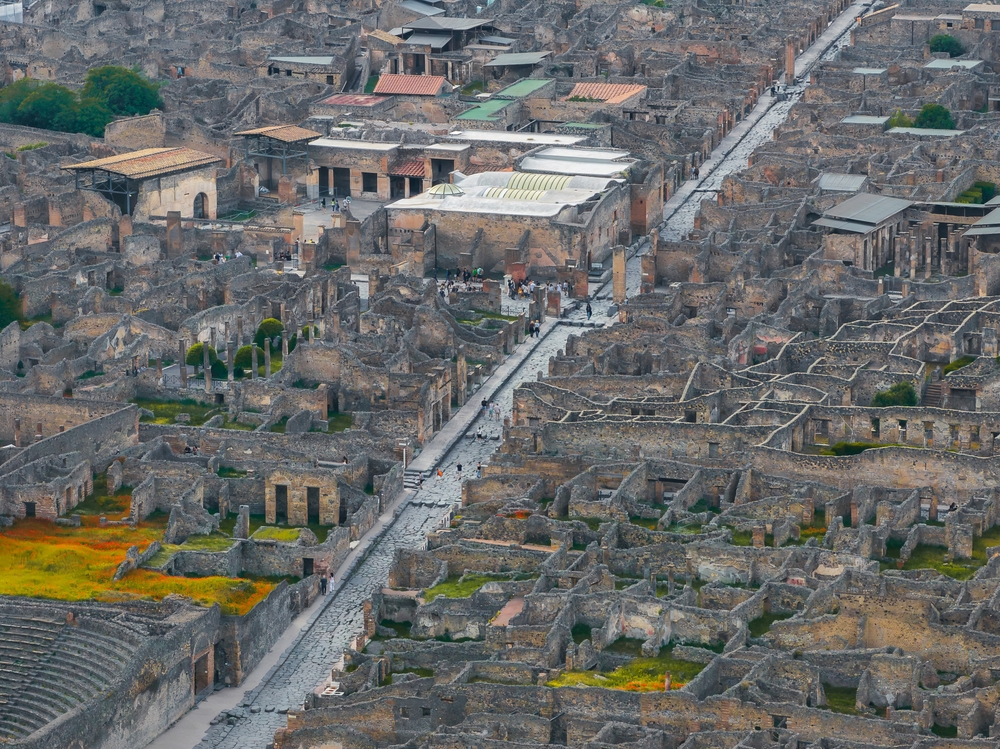
How Mount Vesuvius Killed Its Victims
Most Mount Vesuvius victims died not from lava but from pyroclastic surges — fast, ground-hugging clouds of superheated gas, ash and rock that swept down on the eruption's second day. Scientific studies of the remains point to thermal shock: temperatures so high that death came in moments, before bodies were buried.
The 79 AD eruption unfolded in two phases. First, hours of falling pumice and ash collapsed roofs and trapped people indoors. Then, a series of pyroclastic surges and flows raced outward, killing almost everyone still in the area and entombing the towns.
Pompeii vs. Herculaneum: Two Kinds of Remains
The same eruption left strikingly different evidence at the two main sites:
- Pompeii — ash and casts. Victims were buried in fine ash that hardened around them. As the soft tissue decayed it left body-shaped cavities in the rock. In the 19th century, archaeologists poured plaster into these voids, producing the famous casts that capture the final postures of the dying.
- Herculaneum — carbonized skeletons. Closer to the volcano, Herculaneum was hit by hotter surges that carbonized organic material and reduced victims to skeletons almost instantly. Hundreds were found sheltering in the seafront boat houses (fornici), where they had gathered hoping for rescue by sea.
| Feature | Pompeii | Herculaneum |
|---|---|---|
| Main killer | Pyroclastic surge / thermal shock | Hotter pyroclastic surge |
| Burial material | Deep volcanic ash | Hot volcanic flows |
| What survives | Plaster casts from cavities | Carbonized skeletons |
| Notable find | Garden of the Fugitives | Skeletons in the boat houses |
The Estimated Death Toll
The exact death toll is unknown. About 1,500-2,000 bodies have been recovered from Pompeii and Herculaneum combined, but the true total across the surrounding region — towns, villas and farmland — was likely higher, possibly several thousand. Many residents escaped during the first ash-fall phase, which is one reason the casualty figure remains uncertain.
What the vesuvius bodies make unmistakably clear is how sudden the end was. The casts of Pompeii and the skeletons of Herculaneum are among the most direct human records of any ancient disaster — a reminder that this was not a slow burial but a fast, violent death by heat.
To explore the human story further, see our pages on the bodies of Pompeii and the history of the victims.
Pompeii VIP Tour — Reserve Your Date
Pair the ruins with the volcano — pick a date and book a premium guided experience.
Frequently Asked Questions
How did Mount Vesuvius kill the people of Pompeii?
Most victims at Pompeii were killed by pyroclastic surges - fast-moving clouds of superheated gas and ash that swept in on the eruption's second day. Scientific studies suggest intense thermal shock caused near-instant death, with temperatures high enough to be fatal in moments before bodies were buried in ash.
How many people died in the eruption of Vesuvius?
The exact death toll is unknown. Around 1,500-2,000 bodies have been found at Pompeii and Herculaneum combined, but the total across the wider region is estimated to be higher - possibly several thousand. Many residents fled before the deadly surges arrived, so the full number remains uncertain.
Why are Pompeii's victims plaster casts but Herculaneum's are skeletons?
At Pompeii, bodies decayed inside the hardened ash, leaving cavities that archaeologists later filled with plaster to recreate their shapes. At Herculaneum, intense heat carbonized and reduced victims to skeletons almost instantly, preserving bones rather than body-shaped voids, especially in the waterfront boat houses.
Where can you see the bodies of Vesuvius's victims?
Plaster casts of Pompeii's victims are displayed across the Pompeii Archaeological Park, including the Garden of the Fugitives. At Herculaneum, hundreds of skeletons were found sheltering in the seafront boat houses (fornici), some of which can be seen at the site. Always check current displays on pompeiisites.org.