Interesting Facts About Pompeii: 15 Vivid Truths
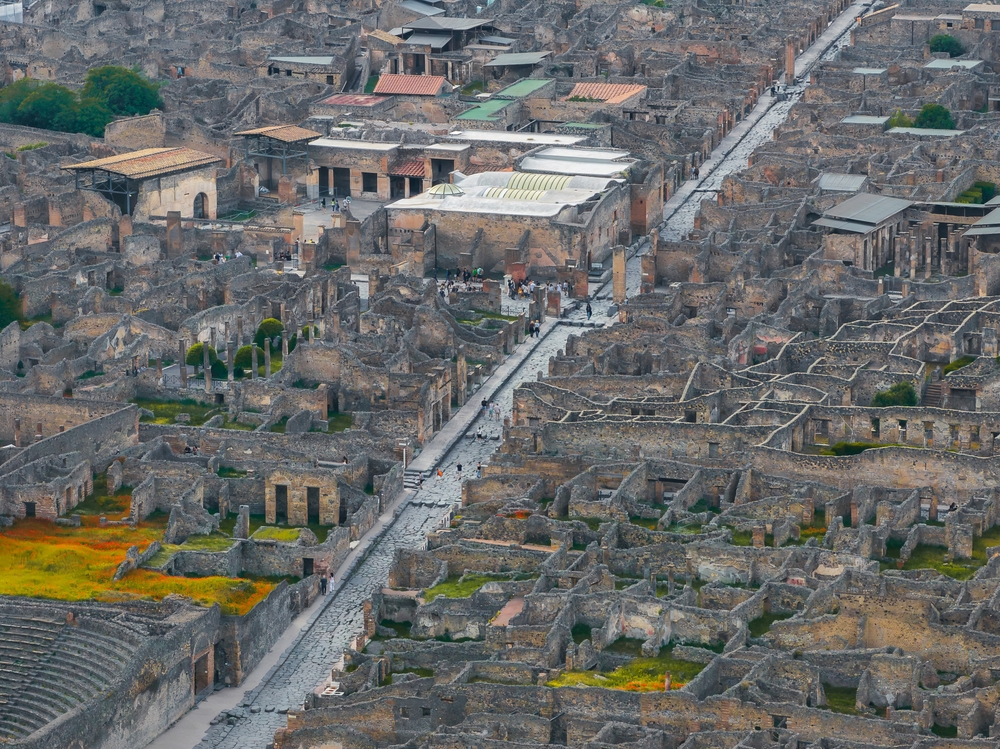
Interesting Facts About Pompeii
The most interesting facts about Pompeii are not about its destruction but about its everyday life, frozen in an instant: a city with fast-food counters, election graffiti, painted "beware of the dog" mosaics, bread still in the ovens, and a volcano that is still active today. Below are 15 accurate, vivid facts that capture what makes this Roman town so extraordinary.
For more, see our deeper roundup of things you didn't know about Pompeii and the main Pompeii facts page.
-
Pompeii had ancient fast food. Around 80 thermopolia — counters with sunken terracotta jars (dolia) — served hot meals and drinks to passersby. Many homes had no kitchen, so eating out was routine.
-
The walls are covered in graffiti. More than 11,000 inscriptions survive: love poems, insults, prices, jokes, and even crude doodles, offering an unfiltered window into ordinary Roman voices.
-
Citizens ran loud election campaigns. Painted slogans (programmata) endorsing candidates for local office still cover house fronts, sometimes "signed" by groups like the mule-drivers or the fruit-sellers.
-
"Cave Canem" — Beware of the Dog. A famous floor mosaic at the House of the Tragic Poet shows a chained dog with the warning Cave Canem, proving Romans already used the same sign we do today.
-
Bread survived in the ovens. Carbonized loaves were found still inside bakery ovens, some even stamped with the baker's mark — sealed and preserved by the heat and ash.
-
The brothel had explicit frescoes. The Lupanar, the city's purpose-built brothel, has small rooms with stone beds and erotic wall paintings, likely advertising or simply decorating the services offered.
-
Mount Vesuvius is still active. The volcano that buried Pompeii has not gone quiet; its last eruption was in 1944, and it remains one of the most dangerous volcanoes on Earth because millions live nearby. See Vesuvius eruptions.
-
The plaster casts are voids, not bodies. As victims' bodies decayed, they left cavities in the hardened ash. Archaeologist Giuseppe Fiorelli poured plaster into these voids, capturing people in their exact final postures. Learn more on the bodies of Pompeii.
-
About two-thirds is excavated. Roughly a third of the city remains deliberately buried, reserved for future archaeologists and better techniques.
-
The streets had stepping stones. Raised blocks let pedestrians cross streets without stepping into the water and waste that flowed along the paving, while gaps let cart wheels through.
-
Pompeii had advanced plumbing. Lead pipes, public fountains, and private water supplies fed homes and baths, drawing on an aqueduct system.
-
The eruption date is disputed. The traditional date of August 24, 79 AD comes from Pliny the Younger's letters, but autumn fruits, heating braziers, and a charcoal inscription found in 2018 point to an October eruption.
-
A nearby town was hit even harder. Herculaneum, closer to Vesuvius, was buried by hotter flows that carbonized wood and food, preserving wooden furniture and even an ancient library of scrolls.
-
Most residents escaped. Of an estimated 11,000–15,000 people, the majority fled during the long pumice-fall phase; those who stayed were killed by the pyroclastic surges the next morning.
-
It was rediscovered by accident. Forgotten for centuries, Pompeii resurfaced during construction and well-digging, with systematic excavation beginning in 1748.
Why These Facts Matter
Taken together, these facts show that Pompeii is interesting not because it died, but because it lets us see a Roman city as it actually lived — its food, advertising, plumbing, humor, and habits. That is what keeps drawing visitors and scholars alike. To keep exploring, browse more Pompeii facts or dig into things you didn't know.
Related Pages
- Pompeii Facts — The main hub of facts about the city
- Things You Didn't Know About Pompeii — More surprising details
- 5 Quick Facts — A fast overview for newcomers
- Roman Life in Pompeii — Daily life behind the facts
Frequently Asked Questions
What are the most interesting facts about Pompeii?
Among the most striking facts: Pompeii had dozens of fast-food counters (thermopolia), walls covered in election slogans and graffiti, a famous 'Cave Canem' (Beware of the Dog) mosaic, loaves of bread carbonized in ovens, and plaster casts that capture victims in their final poses. Mount Vesuvius, which destroyed the city, is still an active volcano today.
How much of Pompeii has been excavated?
About two-thirds of the ancient city has been excavated, leaving roughly a third still buried under volcanic deposits. Archaeologists deliberately leave part untouched for future techniques. Even the excavated areas yield new discoveries regularly, including fresh frescoes, shops, and bakeries uncovered in the ongoing digs in recent years.
Did people in Pompeii really eat fast food?
Yes. Pompeii had around 80 thermopolia — counters with sunken terracotta jars (dolia) that served hot food and drink to passersby, much like ancient fast food. Many homes lacked kitchens, so eating out was normal. A well-preserved thermopolium excavated in 2020 still showed traces of duck, pork, fish, and snails in its serving jars.
Is Mount Vesuvius still active today?
Yes. Mount Vesuvius is still an active volcano and is considered one of the most dangerous in the world because around three million people live nearby. Its last eruption was in 1944. It is constantly monitored, and there are evacuation plans for the densely populated 'red zone' on its slopes around the Bay of Naples.