Food in Pompeii: Roman Diet, Bread, Garum and Street Food
What People Ate in Pompeii
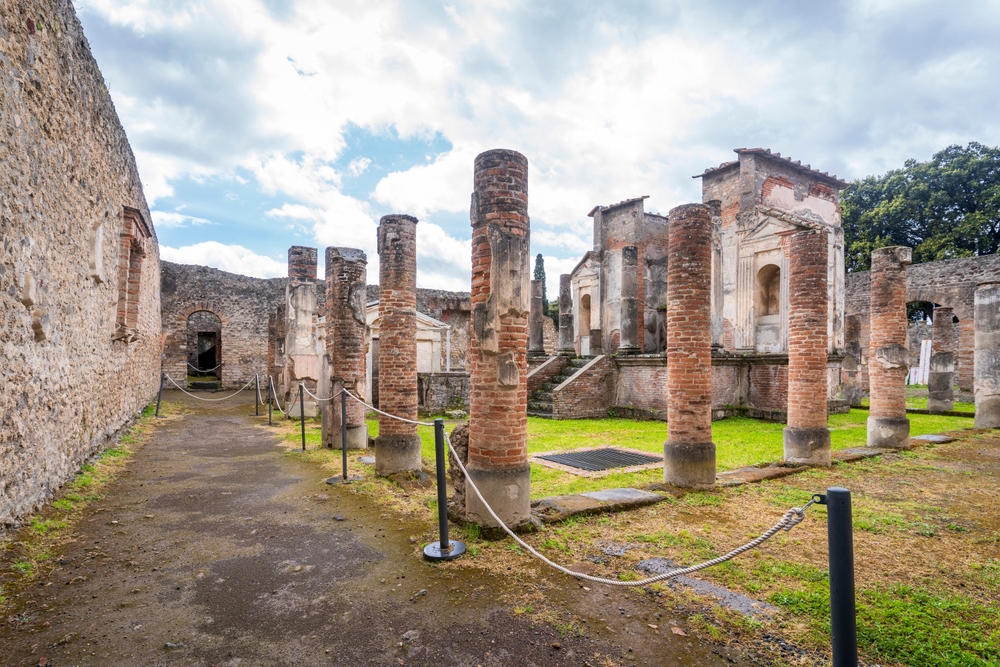
Few places tell us as much about ancient eating as Pompeii food does. Because the eruption of 79 AD sealed the city under volcanic ash, the bakeries, kitchens, market gardens and street counters of this pompeii ancient city were frozen mid-service. We have actual loaves of bread, jars of sauce, charred fruit and the bones of half-eaten meals — a level of culinary evidence that no written cookbook could ever match. Studying roman food pompeii is therefore one of the most direct ways into everyday pompeii city life.
So what did people eat in Pompeii? The honest answer is: far more simply than the lavish banquet scenes painted on villa walls suggest. For the vast majority of residents, daily food was modest, plant-heavy and built around a handful of reliable staples.
The Everyday Roman Diet
The backbone of the roman food pompeii diet was the so-called Mediterranean triad: grain, olives and wine. Around these revolved a wider mix of:
- Bread and grains — the central calorie source, eaten at nearly every meal
- Olives and olive oil — for eating, cooking, lighting and even washing
- Wine — usually watered down, drunk by adults of every class
- Legumes — fava beans, lentils, chickpeas and peas, often cooked into porridge or stew
- Fruit — figs, grapes, apples, pomegranates, dates and dried fruit
- Cheese and eggs — affordable everyday protein
- Fish and shellfish — abundant on the Bay of Naples, both fresh and preserved
Conspicuously, fresh meat was comparatively rare. Pork was the most common, but butchered meat was expensive and tended to appear at religious festivals or on wealthier tables rather than in the daily diet of ordinary people. This pattern — grain and pulses every day, meat occasionally — held true across the Roman world and shaped the city's whole economy, as the trade in oil, wine and sauce shows. You can read more about how these goods were produced and sold on our page about the economy of Pompeii.
Pompeii Bread: The Loaves in the Oven
Nothing captures the immediacy of Pompeii food like its bread. Archaeologists have recovered carbonized loaves of bread still sitting inside the ovens where they were baking when the eruption struck — turned to charcoal but holding their exact shape for nearly two thousand years.
The most famous form is the panis quadratus, a flat, round loaf scored across the top into eight wedge-shaped segments, like a pre-cut pie. The scoring was practical: it let the loaf be broken cleanly into portions by hand. Some of these loaves even carry a baker's stamp pressed into the dough — a kind of ancient brand or quality mark. One surviving stamp reads, in effect, "Celer, slave of Quintus Granius," identifying the enslaved baker responsible for the batch and the household he worked for.
These loaves were not baked at home. They came from the city's bakeries (pistrina), of which Pompeii had dozens. A typical bakery combined a mill, an oven and a shop under one roof. The flour was ground in large hourglass-shaped lava-stone mills, turned by mules, donkeys or enslaved workers walking in endless circles. The volcanic basalt of the region was ideal for milling because it was hard, abrasive and locally abundant. From the mill the dough moved to a domed wood-fired oven much like a modern pizza oven, then out to the counter for sale. To understand how central this routine was to ordinary residents, see our overview of Roman life in Pompeii.
Thermopolia: Pompeii Street Food
If bakeries supplied the staple, the city's pompeii street food came from its thermopolia — counter-service shops that were, quite literally, ancient fast food. More than 80 thermopolia have been identified across Pompeii, a density that tells us eating out was completely normal. Most residents lived in cramped apartments with little or no cooking equipment beyond a small brazier, so buying a hot meal on the street was a daily routine, not an indulgence.
A thermopolium was usually an L-shaped masonry counter opening onto the street, with large terracotta jars (dolia) set into the surface to hold hot stews, porridge, wine and other prepared dishes. Customers ate standing at the counter or carried food away. The brilliantly preserved Thermopolium of Regio V, fully excavated and opened to view in 2020, is the showpiece: its counter is painted with vivid frescoes of a sea nymph, ducks, a rooster and a dog, and the residue inside its jars revealed a menu including duck, pig, goat, fish and snails. For the full story of these shops, visit our dedicated guide to the Pompeii thermopolium.
Garum: Pompeii's Famous Fish Sauce
No account of roman food pompeii is complete without garum — the pungent fermented fish sauce that Romans poured over almost everything. Made by layering fish and fish entrails with salt and leaving the mixture to ferment in the sun for weeks, garum produced a salty, umami-rich liquid used much as we use salt, soy sauce or fish sauce today. Cheaper grades seasoned the food of the poor; the finest grades were luxury goods that changed hands for serious money.
Pompeii and the wider Campania coast were among the most important garum-producing regions in the empire, and the trade made fortunes. The city's best-known producer was Aulus Umbricius Scaurus, a merchant whose name appears stamped on garum containers found far beyond Italy — clear evidence that Pompeii food products were exported across the Mediterranean. Scaurus did well enough from fish sauce that his house was decorated with mosaics depicting the very urcei (sauce jars) that made him rich, an unusually frank celebration of the source of his wealth. Garum was, in short, both a kitchen staple and a major export industry binding food and commerce together.
Recent Discoveries and the "Pizza" Fresco
Modern excavation continues to refine what we know about what people ate in Pompeii. Careful analysis of food residue from kitchens, drains and thermopolium jars has confirmed a varied diet including duck, snails and several kinds of fish, alongside the expected grains and legumes — evidence that ordinary menus were more diverse than once assumed.
The most talked-about recent find is a 2023 fresco uncovered in a Pompeian hall, showing a round flatbread on a silver tray, garnished with fruit (likely a pomegranate and a date) and what may be a pesto-like spread, set beside a cup of wine. The image instantly went viral as a "pizza ancestor." It is genuinely a distant relative of pizza in the sense of being a flatbread used as an edible plate for toppings — but it is not a pizza. It has no tomato (a New World plant that reached Italy only in the 16th century) and no mozzarella. What it really documents is xenia, the Greek-Roman tradition of depicting hospitality gifts of food and drink. It is a beautiful window onto the Pompeian table, and a useful reminder that the city's cuisine belonged firmly to the ancient Mediterranean, not the modern Italian one. To place all of this in context, explore our broader guide to Pompeii culture.
Related Pages
- Pompeii Culture — Society, religion and the arts of the ancient city
- The Economy of Pompeii — Trade, industry and the garum business
- Thermopolium — The ancient fast-food counters in detail
- Roman Life in Pompeii — Daily routines, work and home
Pompeii: Small Group Tour with an Archaeologist
Bring Pompeii's daily life to life — explore with an expert archaeologist in a small group.
Frequently Asked Questions
What did people in Pompeii eat?
The Pompeian diet was based on bread, olives, olive oil, wine, fruit, legumes, cheese and fish. Pulses and grains formed the everyday staple, while fresh meat was relatively rare and reserved for the wealthy or for festivals. Excavated food remains have included duck, pig, goat, fish and snails.
What is garum?
Garum was a fermented fish sauce — the Roman world's most prized condiment, used the way we use salt or soy sauce. It was made by salting and fermenting fish and fish entrails in the sun. Pompeii and the surrounding Campania were a major center of production, and the Pompeian merchant Umbricius Scaurus built a fortune exporting it.
Was real bread found in Pompeii?
Yes. Carbonized loaves of bread were found inside bakery ovens, preserved by the heat of the 79 AD eruption. The most famous is the round panis quadratus, scored into eight wedge-shaped segments, and some loaves carry a baker's stamp.
Did Pompeii have fast food?
Yes. Over 80 thermopolia — counter-service food shops — have been identified in Pompeii. With jars (dolia) set into the counter to hold hot and cold dishes, they were the ancient equivalent of takeaway restaurants and were used daily by ordinary residents.
Did Pompeii have pizza?
No. A 2023 fresco showing a flatbread topped with fruit and what may be a pesto-like condiment was widely described as a 'pizza ancestor,' but it lacks tomato and mozzarella — both of which arrived in Italy centuries later. It is a still-life of a Roman flatbread, not a pizza.